
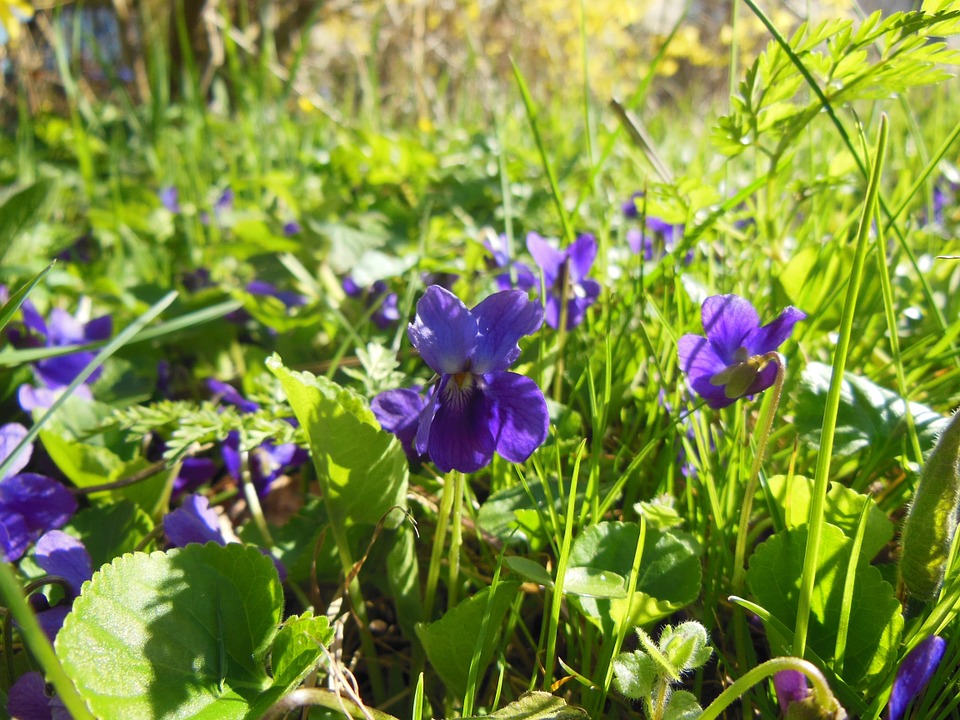
Are you noticing small purple flowers and heart-shaped leaves appearing throughout your lawn? It looks harmless, but you may start noticing it spreading into more areas of your yard.
Wild violet can be particularly difficult to identify because its purple flowers and distinctive leaves can make it look more like a flowering plant than a typical lawn weed. Knowing what you're looking at is the first step toward understanding why it is growing and how it can be managed.
For more than 30 years, Oasis Turf & Tree has helped homeowners throughout Cincinnati, Dayton, and Northern Kentucky identify and understand common lawn weeds. Our premium lawn health care services include fertilization, pre-emergent weed control to help prevent weeds before they emerge, and post-emergent treatments to target existing weeds. By combining targeted weed control with treatments that support healthy turfgrass, we help homeowners manage weeds while creating a thicker, healthier lawn that leaves less room for weeds to compete.
In this article, we'll walk you through the key characteristics of wild violet, including what its flowers and leaves look like, where it commonly grows, how to tell it apart from other plants you may find in your lawn, and what you can do about it.
Quick Answer: Wild violet is a low-growing broadleaf weed that’s easy to recognize by its heart-shaped leaves and purple flowers. It commonly appears in shady, moist areas of the lawn, along edges and beneath trees, or in places where turf has difficulty growing. Conditions such as compacted soil and poor drainage can create an environment where wild violet is more likely to establish.
In this article:
- What Does Wild Violet Look Like?
- Where Does Wild Violet Usually Grow?
- How Can You Tell Wild Violet Apart From Other Lawn Weeds?
- Why Is Wild Violet Showing Up in My Lawn?
- Is Wild Violet Actually a Problem for My Lawn?
- Why Is Wild Violet So Difficult to Get Rid Of?
- What Should I Do If I Have Wild Violet?
- Frequently Asked Questions
What Does Wild Violet Look Like?
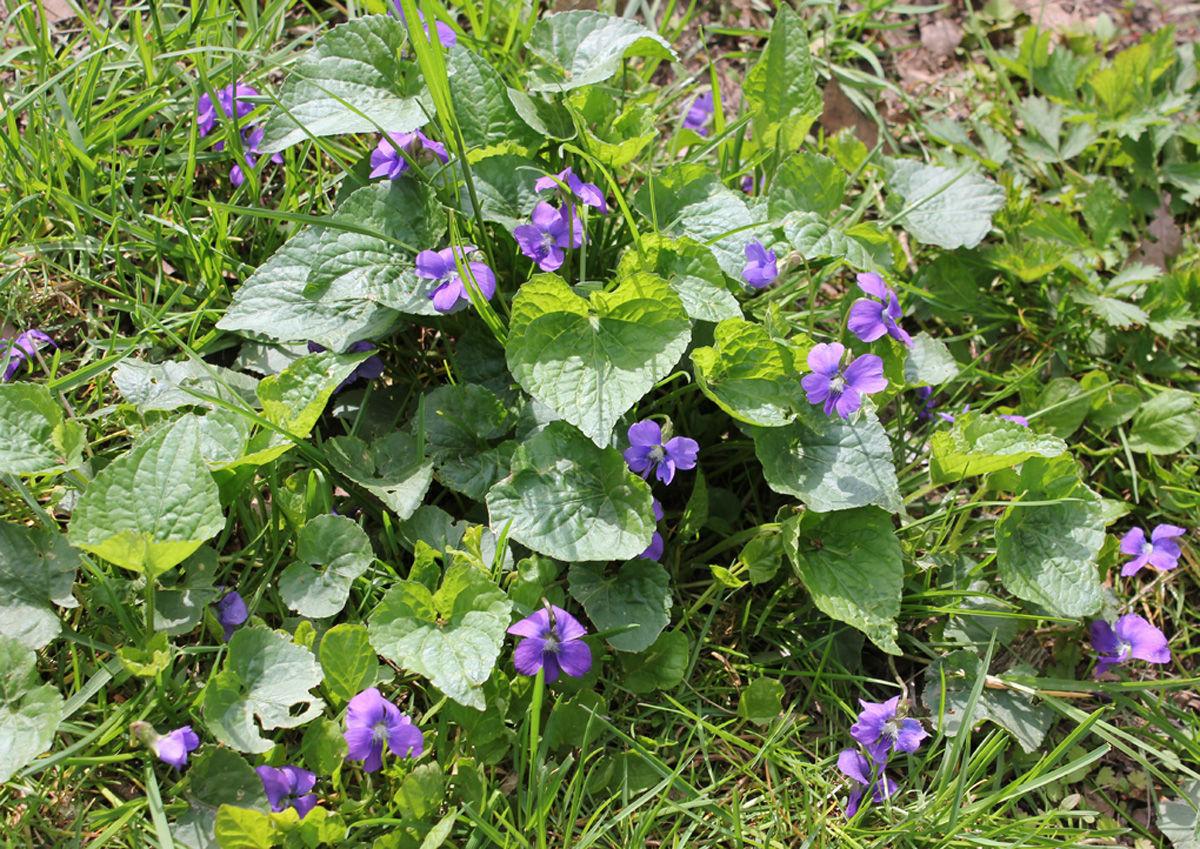
Wild violet is a low-growing broadleaf weed that can be relatively easy to identify once you know what to look for. The plant is best known for its small purple flowers, which typically appear in spring. Its leaves are heart-shaped with slightly rounded edges, and it tends to grow close to the ground rather than growing upright like many other lawn weeds. Wild violet spreads through thick, short underground stems called rhizomes and by seed.
Even when wild violet isn't flowering, you can still identify it by its heart-shaped leaves and low-growing growth habit. The leaves grow from the base of the plant and often form dense patches that can blend into the surrounding lawn.
Where Does Wild Violet Usually Grow?
Wild violet commonly appears in shady, moist areas of the lawn, particularly along the edges of landscaping, beneath trees, and in areas where grass may struggle to grow. However, it can also spread into other parts of the lawn when growing conditions are favorable.
How Can You Tell Wild Violet Apart From Other Lawn Weeds?
Wild violet can sometimes be confused with ground ivy, another broadleaf weed that thrives in similar conditions and may also produce purple flowers. The easiest way to tell them apart is by looking at their leaves and growth habits. Wild violet has distinctive heart-shaped leaves, while ground ivy has rounded, fan-shaped leaves with noticeable ribbed edges and spreads along the ground using above-ground stems.
|
Feature |
Wild Violet |
Ground Ivy |
|
Flowers |
Purple, blue, or sometimes white flowers with five petals |
Small, purple to bluish-purple flowers that grow in clusters along the stems |
|
Leaves |
Heart-shaped, with a smooth or slightly toothed edge |
Round to kidney-shaped, with scalloped or rounded edges |
|
Texture |
Smooth and somewhat glossy |
Often slightly hairy or textured |
|
Growth habit |
Low-growing and forms small clumps |
Spreads along the ground with creeping, above-ground stems |
|
Color |
Green leaves with purple flowers during bloom |
Green leaves and stems, with purple flowers during bloom |
|
When not flowering |
Can be identified by its distinctive heart-shaped leaves |
Often identified by its rounded, scalloped leaves and creeping growth habit |
Why Is Wild Violet Showing Up In My Lawn?
Wild violet can be frustrating to find in an otherwise healthy-looking lawn, especially when it seems to reappear season after season. However, its presence is usually connected to the growing conditions in a particular area of your lawn. Wild violet thrives in shady, moist areas where sunlight is limited, and soil stays damp. Understanding where wild violet grows best and what conditions allow it to establish can help you determine why you are seeing it on your property (and how to fix it).
Wild Violet Prefers the Shade
Wild violet can tolerate shade where many turfgrasses struggle to grow. You may find it growing beneath trees, along the side of your home, near fences, or in other areas that receive less direct sunlight throughout the day. When grass has difficulty getting enough sunlight, it may become thinner and leave more space for weeds like wild violet to establish.
Moist Soil Creates Favorable Conditions for Growth
Wild violet also tends to thrive in moist soil conditions. Areas of your lawn that stay damp for longer periods after rainfall or watering may be more likely to develop wild violet. Poor drainage, low areas of the lawn, or soil that holds onto moisture can all contribute to these conditions.
Growth Can Be Encouraged by Poor Drainage & Compacted Soil
The condition of your soil can also influence where wild violet establishes. Compacted soil can limit the movement of water, air, and nutrients through the soil, which can make it more difficult for your grass to develop a dense root system. When grass is thin or struggling, there may be more opportunity for weeds to establish.
Thin, Struggling Grass Provides Ample Opportunity for Growth
A thick, healthy lawn naturally leaves less room for weeds to establish. When grass becomes thin because of shade, moisture, soil conditions, foot traffic, or other environmental stresses, weeds may have an easier time filling those open areas. This is why wild violet isn't necessarily appearing because you did something wrong. The conditions in a particular part of your lawn may just be more favorable for wild violet than they are for your grass.
Is Wild Violet Actually a Problem For My Lawn?
A small patch of wild violet in your lawn isn't necessarily something you need to worry about right away. For some homeowners, a few plants may not be worth the effort or cost of controlling. However, wild violet can become more noticeable and difficult to manage if it begins to spread throughout your lawn.
One reason homeowners choose to control wild violet is that it can compete with desirable turf for:
- Space
- Sunlight
- Water
- Nutrients
As wild violet becomes more established, it can create patches where the grass is thinner, and the weed becomes more prominent. Its ability to spread through underground structures can also make the plant more persistent and harder to eradicate than some of the other weeds homeowners encounter.
When Do You Actually Need To Take Care Of Wild Violet?
Whether wild violet is a problem depends on how much is present and what you want your lawn to look like. A few plants in one consolidated part of your lawn may not significantly affect the overall appearance or health of your grass. But if you are seeing larger patches, an increasing number of plants each year, or wild violet appearing throughout multiple areas of the property, professional treatments may be a good option.
Homeowners commonly choose to control wild violet because they want to maintain a more uniform stand of desirable turfgrass. If left unmanaged, an established population can continue to spread and become more challenging to control over time.
Whether or not wild violet needs to be controlled ultimately depends on your preferences for how you want your lawn to look. If you do choose to control it, it’s important to treat intensively early on to knock back as much existing growth as possible. Afterward, putting down new seed can help fill in bare areas and leave less room for wild violet to grow.
Why Is Wild Violet So Difficult to Get Rid Of?
Wild violet has a narrow window when treatments can be most effective. During the summer months, the plant develops a waxy coating, or cuticle, on its leaves that can make it more difficult for treatments to penetrate the plant and reach the root zone.
That’s why fall is the ideal time to treat wild violet. As temperatures cool, the plant begins actively moving nutrients down into its root system to prepare for winter. Treatments applied can also be carried down into the root zone the same way. The plant also loses its waxy coating in the fall, making this time of year the best opportunity for effective control.
Wild violet can be particularly persistent because it is a perennial weed, which means it can survive from one growing season to the next. Along with that, wild violet can also be difficult to control because of the way it spreads through an underground root system. Pulling or removing the leaves and stems you see above the soil may not eliminate the entire plant, allowing the underground root system to remain and produce new growth. Because wild violet is a perennial, that root system can survive through the winter and produce new growth again the following growing season, making established plants more difficult to control.
What Should I Do If I Have Wild Violet?
If you only have a small amount of wild violet, the first step is deciding whether you actually want to control it. A few plants may not significantly affect the overall appearance or health of your lawn, especially if they are limited to an area where they are less noticeable. However, if you prefer a more uniform lawn or notice the patch beginning to spread, you’ll want to consider your control options before it becomes more established.
Pulling wild violet may remove the visible growth and improve your lawn’s appearance, but it won’t eliminate the roots or prevent the weed from growing back.
Wild violet and ground ivy are best controlled with a post-emergent weed control product. You can apply these products yourself using a store-bought option or hire a professional lawn care company to handle the application.
Whether you choose to leave your wild violet alone, manage it yourself, or bring in professional help, getting expert advice can help you make an informed decision.
Want to learn more about what we offer? You can visit our website to learn more about our programs and pricing. Or, if you’re looking to expand your weed knowledge, check out our YouTube series, where we cover how to identify common weeds, where they tend to grow, and what you can do to control them.
If you want to speak to a Turf & Tree Specialist, you can call (513) 697-9090, or if you’re ready to explore treatment options, request a free quote online by filling out a quick form on our website.
Frequently Asked Questions
Will wild violet come back after treatment?
Yes, wild violet can come back after treatment. Established perennial weeds may require more than one treatment to achieve control, and can in some cases take years to completely eradicate.
Does mowing get rid of wild violet?
Mowing can remove the visible leaves and flowers, but it generally does not eliminate the plant. Because wild violet has an underground root system, it can continue growing after being mowed.
Does wild violet produce seeds?
Yes. Wild violet can reproduce by seed as well as through its underground structures, giving it multiple ways to persist and spread.
Can drought cause wild violet to appear?
Drought doesn't necessarily cause wild violet to appear, but periods of environmental stress can weaken desirable turf. When grass becomes thin or stressed, weeds may have more opportunity to establish.
Topics: