
You’ve just finished clearing the lawn, and a few days later, it’s covered in leaves again. Keeping up with fall cleanup can feel like a never-ending job, especially when you’re spending your weekends raking, filling bags, and dragging them to the curb.
But what if some of those leaves could actually help your lawn?
At Oasis Turf & Tree, we’ve spent the past 30 years focusing on what’s happening beneath your grass and how healthier soil supports a healthier lawn. That includes helping homeowners understand how everyday maintenance can work alongside their lawn care treatments. And with over 24,000 homeowners trusting us to care for their lawns, our advice is backed by years of experience putting it into practice. Mulching leaves is one fall practice we recommend because it returns organic matter and nutrients to the soil, putting those fallen leaves to use as they break down.
We’re here to explain why mulching leaves is worth doing, how it benefits your soil, and how to fit it into your fall routine.
Quick Answer: We recommend mulching your leaves whenever they cover less than half of your lawn. Mulching your leaves can benefit your lawn by returning organic matter and recycling nutrients as they decompose. Mow dry leaves into small pieces that settle between the grass blades, collecting excess leaves so they don’t form a heavy layer. Mulching supports soil health over time, but it doesn’t replace fertilization or other needed lawn care.
In this article:
- What Does It Mean to Mulch Leaves?
- How Do You Mulch Leaves Into Your Lawn?
- How Do Mulched Leaves Benefit Your Soil?
- How Can Mulching Leaves Save Time and Reduce Yard Waste?
- How Does Leaf Mulching Fit Into Your Fall Lawn Care?
- What Other Fall Lawn Tips Should I Follow?
- Frequently Asked Questions
What Does It Mean to Mulch Leaves?
Mulching simply means using your mower to chop leaves into small pieces. Those pieces settle between the grass blades, where they gradually break down.
That’s different from leaving a blanket of whole leaves over the lawn. Heavy leaf coverage can block sunlight and smother the grass. Finely shredding the leaves helps them settle between the grass blades, returning organic material to your lawn without covering or suffocating the grass.
Fallen leaves contain organic matter and nutrients that can benefit your soil, and by mulching them into your lawn, you allow those nutrients to return to the soil as the leaves break down, putting them back to use instead of bagging them up.
How Do You Mulch Leaves Into Your Lawn?
A good result should look like grass with small leaf pieces mixed into it. Here’s how our team recommends getting there:
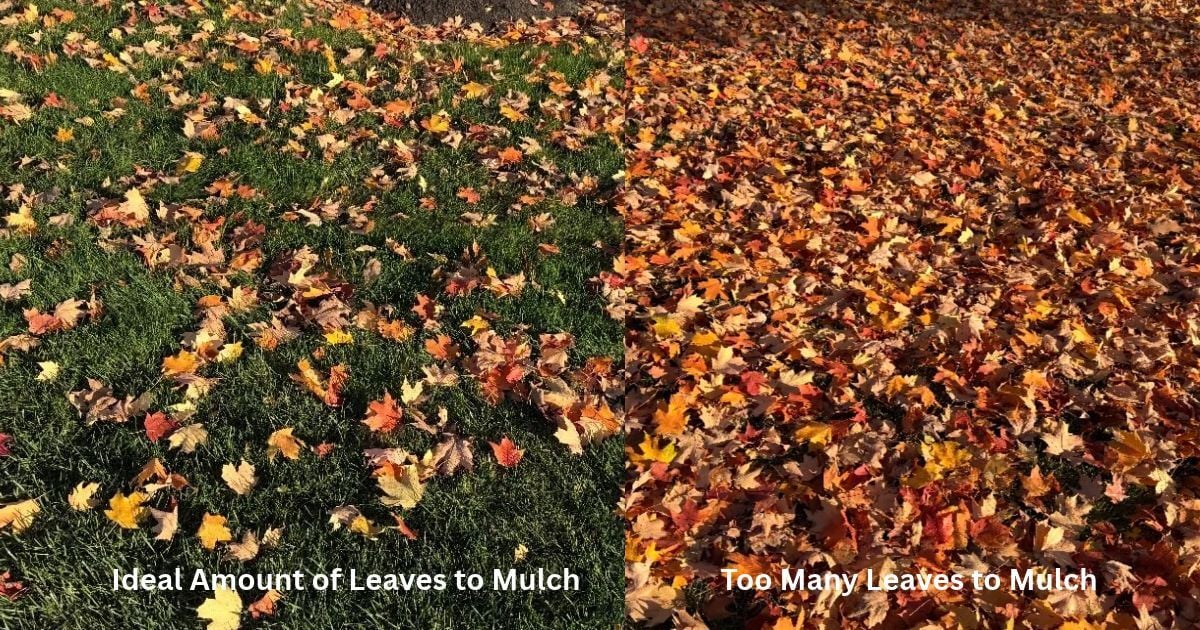
1. Check How Much of the Lawn Is Covered
If leaves cover more than 50% of your lawn, we recommend collecting some before mulching the rest.
Trying to mulch too many leaves at once can leave a thick layer over your grass instead of allowing the pieces to settle between the blades. That layer can block sunlight and trap excess moisture, potentially smothering the grass.
2. Wait Until the Leaves Are Dry
Dry leaves shred more readily. Wet leaves tend to stick together and can leave clumps, making it harder to distribute them evenly.
3. Use Your Mower’s Mulching Setting
For established lawns, our team recommends a mowing height of approximately 3½ inches when mulching leaves.
Use a compatible mulching setting or blade according to your mower’s instructions. Keeping leaves beneath the mower long enough to be chopped repeatedly helps produce smaller pieces.
4. Make a Second Pass if Needed
Our team recommends mowing over the leaves twice when needed to shred them thoroughly. After the first pass, check whether large pieces or clumps remain.
The finished appearance matters more than the number of passes. Leaves should begin mixing into the grass instead of sitting in a noticeable layer on top.
5. Check That the Grass Is Visible
Use this table to assess the result:
|
What You See |
What to Do |
|
Small pieces mixed between clearly visible grass blades |
You’ve achieved the goal |
|
Large leaf pieces scattered across the surface |
Make another pass if conditions permit |
|
Thick clumps or a layer covering the grass |
Collect excess material and redistribute what remains |
|
Wet leaves sticking together |
Wait for drier conditions when possible |
How Do Mulched Leaves Benefit Your Soil?
When you look at your lawn, you probably notice its color, thickness, or bare spots first. But the soil helps determine how well that grass can grow.
Mulched leaves support that growing environment in several ways.
They Return Organic Matter and Recycle Nutrients
Leaves contain nutrients such as nitrogen, phosphorus, and potassium, which are also nutrients used in lawn fertilizers. As leaves decompose, some of those nutrients become available for plants to use again. Their organic matter can also help improve the soil’s ability to hold moisture.
At Oasis, we think of mulched leaves as a natural supplement to your lawn care. They contribute useful material, but the amount and availability of nutrients vary. You aren’t applying a measured dose the way you would with fertilizer.
They Support the Living Organisms in Your Soil
Soil contains bacteria, fungi, and other organisms that help break down organic material. Returning leaves gives those decomposers material to work through as part of the soil’s natural recycling process.
The Benefits Build Gradually
You probably won’t notice a dramatic change in your lawn’s appearance a few days after mulching.
Our team encourages homeowners to think about the benefit beneath the surface: supporting the soil and the organisms that help create healthy growing conditions. Returning suitable amounts of organic material can be a useful habit over time.
According to research summarized by Purdue University, mulching tree leaves into your lawn can improve soil structure. However, it isn’t an immediate fix for compacted soil, poor drainage, or struggling grass.
How Leaf Mulching Supports Your Lawn
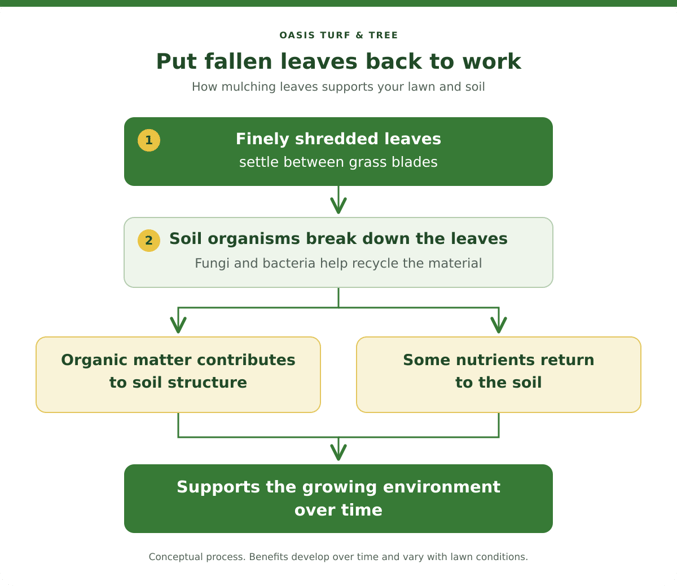
Diagram showing how finely shredded leaves break down, adding organic matter and returning some nutrients to support lawn soil over time.
How Can Mulching Leaves Save Time and Reduce Yard Waste?
Raking is only part of leaf cleanup. You also have to gather piles, fill bags, move them, and arrange for disposal. Then the next round of leaves falls.
Mulching can reduce those collection steps. When conditions are suitable, you can manage leaves during your regular fall mowing rather than treating them as a separate cleanup project.
How often you need to do it depends on your property. We recommend checking weekly during heavy leaf fall if you have mature trees or live near woods. If you have only one small tree, the amount of cleanup and material returned to the lawn may be minimal.
You don’t have to mulch every leaf to benefit. Collecting some and mulching the rest may be the most manageable approach.
How Does Leaf Mulching Fit Into Your Fall Lawn Care?
Leaf mulching works alongside your other maintenance and treatments. Each serves a different purpose.
Keep Your Fertilization Plan in Place
Mulched leaves don’t provide the same concentrated, predictable nutrition as a fertilizer application. We wouldn’t expect leaf mulching alone to produce the same consistent color and growth as a suitable fertilization program.
Want to learn more about why fertilizer matters? We made a video explaining its three biggest benefits, how a lack of proper nutrition can leave your lawn more vulnerable to disease, drought stress, and weeds, and what kind of fertilizer we use on the lawns we care for.
Clear Heavy Coverage Before Lawn Care Services
Oasis does not treat lawns when leaves cover more than 50% of the lawn. Before your visit, mulch manageable amounts and collect excess leaves.
This helps fertilizer reach the lawn instead of remaining on top of a leaf layer. Before aeration and overseeding, clearing heavy coverage also helps grass seed reach the soil.
Continue Aftercare if Overseeding Has Been Performed
Once your new grass is ready for mowing, you can begin mulching small amounts of leaves as part of your routine. A general guideline is to wait until the new grass grows above 3 inches, while following your aftercare instructions. Before mowing, gently tug on a few blades to check that the grass is rooted firmly enough to resist pulling out of the soil.
What Other Fall Lawn Tips Should I Follow?
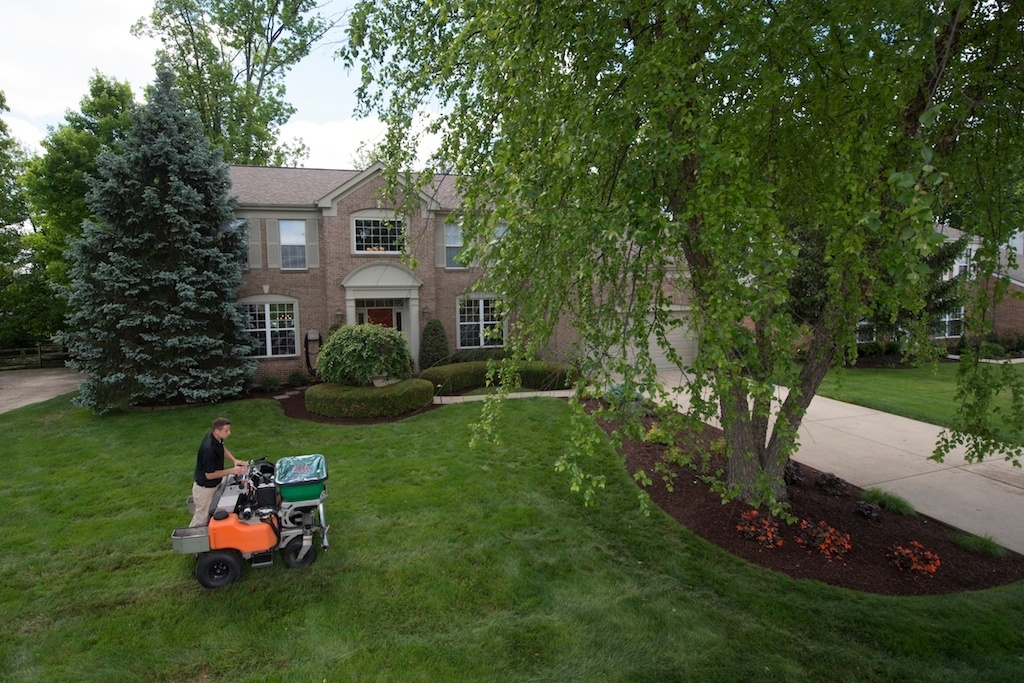
Now that you know how mulching leaves can give your soil an extra boost, you may be wondering what else you can do to help your lawn look its best.
We wrote an article that covers seven things you should do for your lawn in the fall, what to avoid, and how to understand what your lawn needs.
Looking for advice beyond the fall? We also made a video that walks Ohio homeowners through lawn care for the entire year, month by month. It covers when to fertilize, apply weed control, aerate and overseed, and more.
Interested in improving your lawn’s health but need a little guidance? Explore our services and pricing on our website, or call (513) 697-9090 to talk with a Turf & Tree Specialist about what your property needs.
Frequently Asked Questions
Does mulching leaves create thatch?
No. Properly shredded leaves break down and contribute organic matter without increasing thatch. However, leaving a thick layer of leaf pieces over your grass can still smother it, so try to distribute pieces evenly.
Should I wait until all the leaves have fallen before mulching?
It’s easier to keep up with smaller amounts. Waiting can leave you with a heavy accumulation that’s harder to shred and spread without covering the grass.
Can I mulch my leaves with a regular mower?
Yes, a regular lawn mower can shred leaves into smaller pieces that settle between grass blades. For the best results, mow when the leaves and grass are dry, and make an extra pass if needed. If the shredded leaves still cover your grass, remove some to avoid smothering the lawn.
Can I put extra leaves in my landscape beds?
Yes, shredded leaves can be used as mulch in landscape beds. Keep them away from plant stems and tree trunks, and avoid thick, matted layers.
Topics: