
Choosing grass seed can seem simple until you’re standing in the lawn and garden aisle staring at dozens of bags, all claiming to be the “best.” The problem is, there isn’t one grass seed that will work perfectly for every lawn. Choosing the wrong seed for your growing conditions can leave you with poor grass growth, thin or weak grass, or a lawn that requires more maintenance than you expected.
At Oasis Turf & Tree, we know that every lawn has different challenges, and for the past 30 years we’ve specialized in helping grass types and local soils in Cincinnati, Dayton, & Northern Kentucky thrive. We know that what works well for one lawn may not be the best fit for another.
The amount of sunlight your lawn receives, your soil conditions, how much traffic your lawn gets, and even how much time you want to spend maintaining it can all influence which seed is the right choice. We’re here to walk you through the most important factors to consider, from your region and sunlight to soil conditions, lawn use, maintenance expectations, and seed labels, so you can have a better understanding of how to choose grass seed that gives your lawn the best chance to establish strong, healthy growth.
Quick Answer: There is no one-size-fits-all grass seed. Choosing the best seed for your lawn depends on several factors, including:
- Your climate and growing conditions
- Whether your area is extremely sunny or shady
- Your desired appearance
- What the grass will be used for
- Soil conditions
- How much time you want to spend taking care of it
- Drought tolerance
- Disease resistance
For Cincinnati, Dayton, and Northern Kentucky, Turf Type Tall Fescue is the best-suited grass type for the region. Its versatility allows it to perform well in a variety of conditions, while its disease and drought tolerance make it a reliable choice for local lawns. Seed type matters because not every type is suited to every region or growing condition. Choosing a type that is well-suited to the local climate gives it a better chance of establishing, growing, and remaining healthy.
In this article:
- What Makes One Grass Seed Better Than Another?
- Consider Your Region & Climate
- How Much Sun Does Your Lawn Get?
- Consider How You Use Your Lawn
- What Are Your Lawn’s Soil Conditions?
- How Much Lawn Maintenance Are You Willing to Do?
- What Is the Best Grass Seed for Your Lawn?
- When Seeding Isn’t the Right Solution
- Still Not Sure How to Choose the Best Grass Type for Your Lawn?
- Frequently Asked Questions
What Makes One Grass Seed Better Than Another?
Several factors can make one type of grass seed better suited to certain climates and growing conditions than another. Characteristics such as drought tolerance and disease resistance can play a role, but there is no single “best” grass seed for every lawn. The right choice depends on several factors, including:
Your Climate and Growing Conditions
Different types of grass are better suited to different climates and growing conditions. In Cincinnati, Dayton, and Northern Kentucky, choosing a cool-season grass that can handle our changing temperatures is especially important for long-term lawn health.
Whether the Area is Extremely Sunny or Shady
The amount of sunlight your lawn receives can have a major impact on which grass seed will perform best. Some varieties thrive in full sun, while others are more tolerant of shade and can handle areas that receive limited sunlight.
Your Desired Appearance
Not all grass looks the same. Grass varieties can differ in color, texture, density, and growth habits, so it’s important to consider whether you want a fine, uniform appearance or a more rugged, durable lawn.
What the Grass Will Be Used For
Think about how your lawn is used throughout the year. If children playing, pets running, or frequent foot traffic is common for your lawn, you'll want a seed variety that can tolerate wear and recover from damage.
Soil Conditions
Healthy grass starts with healthy soil. Soil type, compaction, drainage, pH, and nutrient availability can all affect how well grass seed germinates and establishes. Choosing seed that works with your soil conditions can give your lawn a stronger start.
How Much Time You Want to Spend Taking Care of It
Some grass varieties require more maintenance than others. It’s important to consider how much time you're willing to spend mowing, watering, fertilizing, controlling weeds, and addressing other lawn care needs before choosing your seed.
Drought Tolerance
Some grass varieties are better equipped to handle periods of hot, dry weather than others. If your lawn is prone to drought stress during the summer, choosing a variety with stronger drought tolerance can help it remain healthier in hotter temperatures.
Disease Resistance
Certain grass varieties are more resistant to common lawn diseases than others. Choosing seed with good disease resistance can help reduce the likelihood of problems developing.
Consider Your Region & Climate
When choosing grass seed, it’s important to look beyond the bag’s “best” or “premium” label. Different grass types are better suited to different climates, and the seed that performs well in one part of the country may struggle in another. Your region’s temperatures, seasonal changes, rainfall, and growing conditions all play a role in determining which grass will give your lawn the best chance to grow healthy year-round.
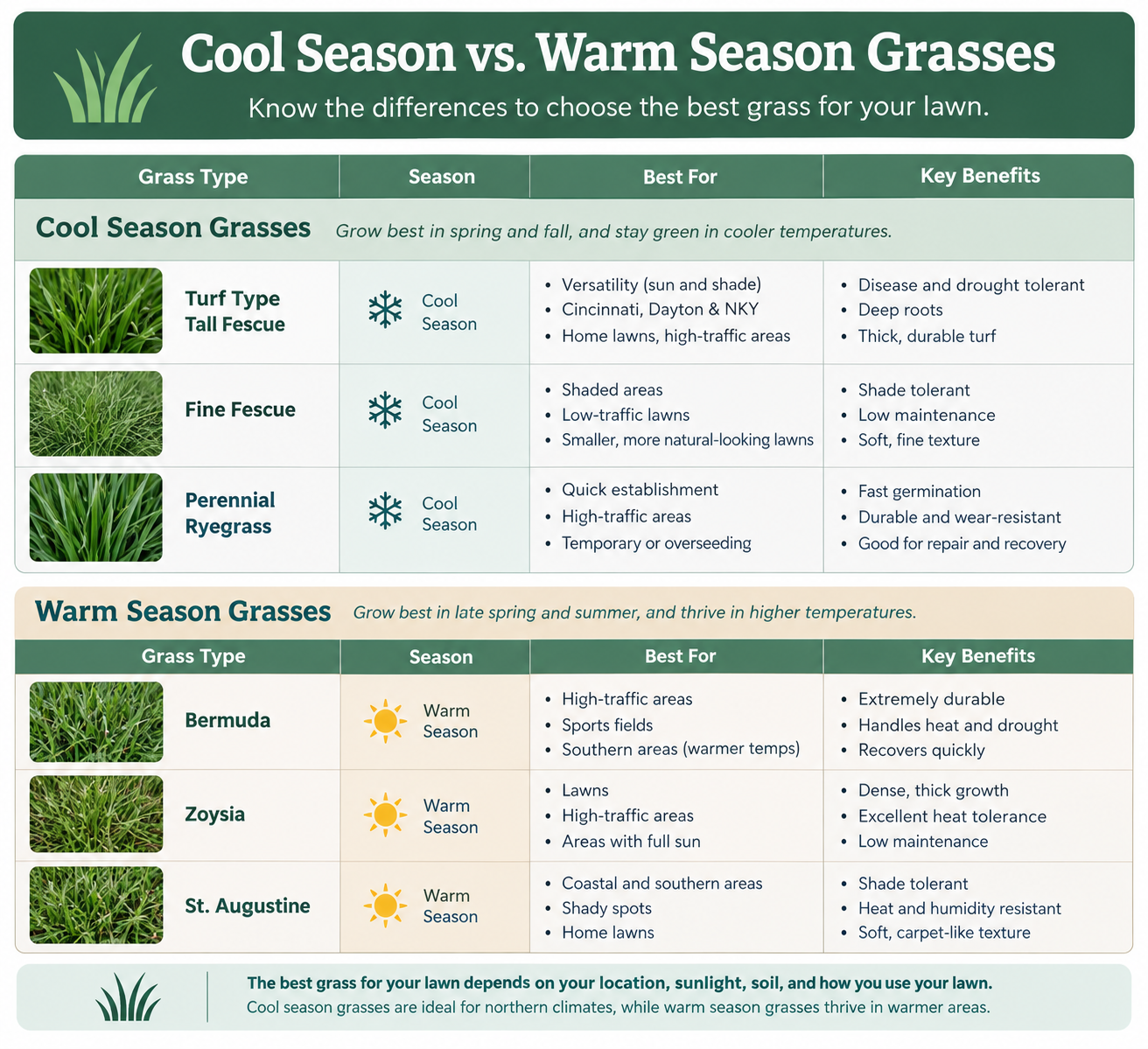 For homeowners in Cincinnati, Dayton, and Northern Kentucky, cool-season grasses are the better fit because they are adapted to our seasonal climate and can establish and grow during the cooler portions of the year.
How Much Sun Does Your Lawn Get?
Sunlight is an important factor when choosing grass seed. Before selecting a seed, take a look at how much direct sunlight areas of your lawn receive throughout the day. A grass variety that thrives in direct sun may struggle in a shaded area, while shade-tolerant varieties can perform better in more shaded areas with less sunlight.
The best grass option for Cincinnati, Dayton, & Northern Kentucky for both shaded and sunny areas is Turf Type Tall Fescue. Tall Fescue is the most all-encompassing turf type, thriving in a variety of conditions.
Consider How You Use Your Lawn
The best grass seed for your lawn also depends on how you plan to use it. A lawn that gets regularly used by pets or children and gets heavy foot traffic needs different characteristics than a lawn that is just there to look pretty. When choosing grass seed, consider how much activity your lawn will see and how important factors like durability, appearance, and maintenance are to you.
|
Lawn Needs |
Best Grass |
Why |
|
Best for High Traffic Lawns |
Bermuda Grass |
Bermuda grass is highly durable and has a very high wear tolerance, making it well suited for areas that experience frequent foot traffic and repeated use. |
|
Best for Quick Establishment |
Ryegrass |
Ryegrass germinates and establishes quickly, making it a good option when you want to see new grass develop in a shorter amount of time. |
|
Best All-Around Grass for Cincinnati, Dayton, & Northern Kentucky |
Turf Type Tall Fescue |
Turf-type tall fescue offers a strong balance of durability, drought tolerance, heat tolerance, and shade tolerance. Its versatility makes it a great fit for the various conditions found in this region. |
|
Lowest Maintenance |
Fine Fescue |
Fine Fescue generally can perform well with lower maintenance when growing conditions are suitable. |
What Are Your Lawn’s Soil Conditions?
The condition of your soil plays a major role in how well grass seed establishes. Even the best grass seed can struggle if the soil is compacted, lacking nutrients, or unable to provide the water and oxygen new grass needs to develop strong roots.
Why Soil Condition Matters Before Choosing Seed
Different grass types can tolerate different soil conditions, so it is important to know what's happening below the surface before choosing a seed. Before seeding, consider whether your soil:
- Drains properly
- Feels heavily compacted
- Has struggled to support healthy grass in the past
Improving these issues before seeding can give your new seed a much better chance of success.
How Soil Quality Affects Establishment
Grass seed needs more than sunlight and water to establish successfully. New seed needs loose, healthy soil that allows its roots to grow and access the moisture, oxygen, and nutrients they need.
Poor soil conditions can lead to:
- Slow germination
- Thin turf
- Weak root development
For example, the most common poor soil condition is compacted soil, often found in Cincinnati, Dayton, & Northern Kentucky. To combat this and ensure healthy soil and available nutrients, we recommend aerating your lawn once every year. Aerating your lawn helps create pathways for necessary nutrients, water, and oxygen to reach the roots for healthy growth. Without this, it’s difficult for the soil to have access to these things.
Want to learn more about Aeration & Overseeding? Check out our YouTube video to learn what Aeration & Overseeding is, how the process works, and how it can help improve the health and appearance of your lawn.
Watch Now: What is Aeration & Overseeding?
How Much Lawn Maintenance Are You Willing to Do?
When choosing grass seed, it is important to think about how much time and effort you are willing to put into maintaining your lawn. Some grass types require less attention, while others may need more consistent watering, mowing, and care to stay healthy.
If you want a lawn that does not require constant attention, look for grass varieties that are naturally more tolerant of:
- Drought
- Heat
- Disease
- Varying soil conditions
Turf Type Tall Fescue is a popular choice in the Cincinnati, Dayton, and Northern Kentucky areas because of its durability and ability to handle a range of growing conditions.
However, low-maintenance does not mean no-maintenance. Every lawn still needs proper mowing, watering, and nutrients to stay healthy.
Want to learn more about proper lawn maintenance? Check out our YouTube videos for tips on how much water your lawn needs each week, the best time to water, the ideal mowing height, how to keep your mower blades sharp, and how often you should mow for a healthier lawn.
Watch Now: Proper Mowing Tips: The 3 Most Important Categories
Watch Now: How Much Water Does My Grass Actually Need?
Grass That Requires More Attention
Some grass types may require more hands-on care to perform their best. This can include:
- More frequent watering
- Closer attention to mowing height
- Additional maintenance during periods of heat or drought
Low-cut grass requires more attention and maintenance. Kentucky Bluegrass and Ryegrass, for example, tend to require more hands-on care because they are more susceptible to certain lawn diseases.
One common example is rust disease, a surface-level fungal infection that can affect Kentucky Bluegrass. While it typically does not cause serious damage to the plant itself, it can leave behind an orange, rust-like appearance across your lawn.
Watering and Mowing Considerations
Your grass seed choice can also affect your regular lawn care routine. Consider how often you are realistically willing to water and mow your lawn.
If you do not want to spend a lot of time managing your lawn during hot, dry periods, choosing a grass with good drought and heat tolerance may make maintenance easier, such as Turf Type Tall Fescue.
Before choosing a grass seed, consider whether you are willing to provide that extra care. A grass type that looks great under ideal conditions may not be the best choice if its maintenance requirements do not fit your routine.
The best grass seed is not necessarily the one with the most impressive list of characteristics. It is the one that fits your lawn, your environment, and the amount of maintenance you are willing to provide.
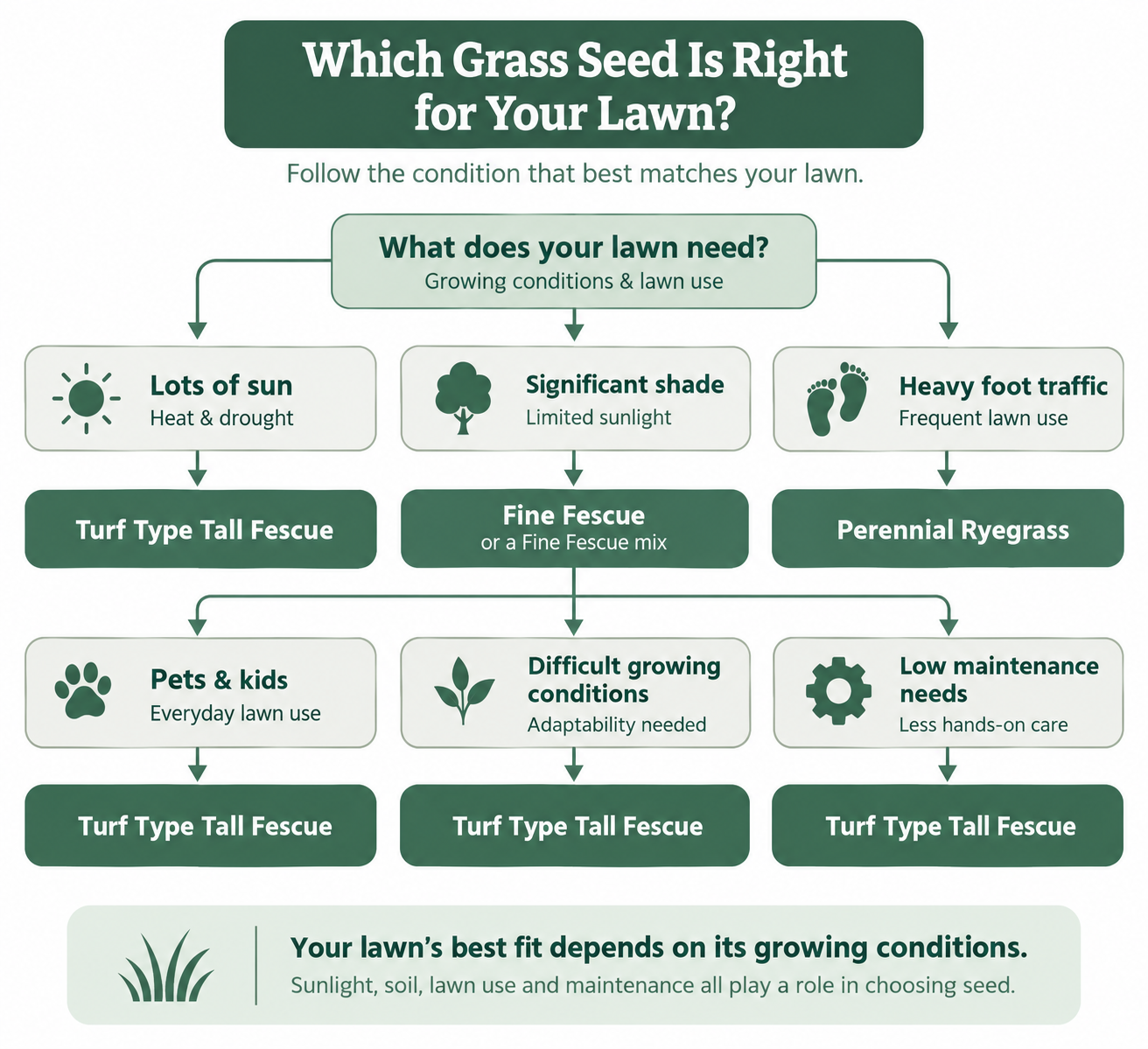
What is the Best Grass Seed for Your Lawn?
The best grass seed depends on your lawn’s growing conditions and how you plan to use the space. Rather than looking for one “best” grass seed, consider factors like sunlight, traffic, maintenance needs, and how difficult your lawn is to grow.
When Seeding Isn’t the Right Solution
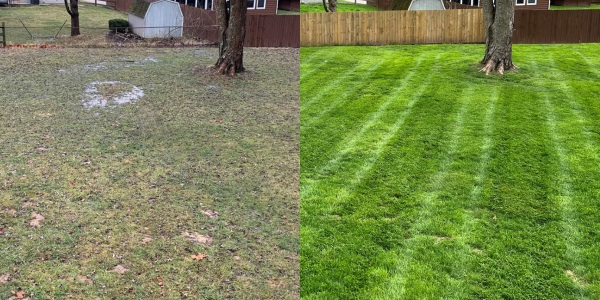
Grass seed can be an effective way to improve a thin or damaged lawn, but it is not always the best answer. Before seeding, it’s worth determining why the lawn is struggling in the first place. In some cases, improving the existing turf, correcting an underlying soil issue, or choosing sod may provide a better long-term result.
|
Your Lawn Situation |
What Makes More Sense |
|
Your lawn has healthy grass but looks thin or stressed |
Improve existing grass with proper mowing, watering, fertilization, aeration, and weed control. |
|
Grass continues to struggle or die despite reseeding |
Address the underlying problem first, such as compacted soil, poor drainage, excessive shade, or improper maintenance. |
|
You're unsure what is causing your lawn's problems |
Get a professional lawn evaluation to determine whether seeding or another solution is the best fit. |
|
Your lawn already has good overall coverage |
Reseeding may not be necessary. Improving the health of the existing turf may be enough to help it fill in. |
Still Not Sure How to Choose the Best Grass Type for Your Lawn?
If you’re still unsure which grass type is best for your lawn, or whether your lawn needs seeding at all, a professional opinion can help. Even if you ultimately decide to handle your lawn care yourself, getting insight from someone who understands local lawns and knows how to identify underlying lawn problems can help you make a more informed decision. At Oasis, we’re happy to provide that insight at no cost.
At Oasis Turf & Tree, you can call and speak with a Turf & Tree Specialist to receive a free, customized quote based on your property. Call us at (513) 697-9090 or fill out our quick quote form on our website.
Not ready for a quote yet? That’s okay, too. We believe in being transparent about our pricing, which is why you can find our pricing information right on our website. You’ll be able to see what our average customer pays, along with a typical price range for each service, so you can get an idea of what to expect before making a decision.
Frequently Asked Questions
Should I buy a grass seed blend or mix?
At Oasis, we don't recommend mixing different seed types because it can lead to inconsistencies in the lawn's appearance and texture.
How much grass seed do I need?
The amount depends on the type of seed, the size of the area, and whether you are establishing new turf or overseeding an existing lawn. Always check the recommended application rate for the specific seed you purchase.
Should I seed my lawn or use sod?
Seed can be a good option for improving an existing lawn or filling larger areas, while sod provides an established lawn much faster. Your lawn’s condition, timeline, budget, and the underlying cause of the problem should all factor into the decision.
Does grass seed expire?
Grass seed can lose viability over time, especially when stored in warm or humid conditions. Check the testing date on the label and avoid relying on old seed that may have been stored improperly.
Topics:


.jpg?width=2048&height=1365&name=NALP_Gayle_Lawn_Pictures%20(34).jpg)
.jpg?width=2048&height=1366&name=NALP_Gayle_Lawn_Pictures%20(8).jpg)


.jpg?width=2048&height=1366&name=NALP_Gayle_Lawn_Pictures%20(9).jpg)