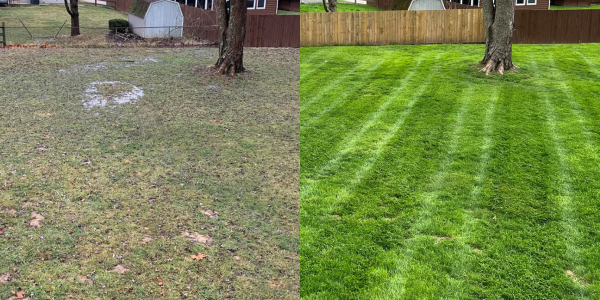

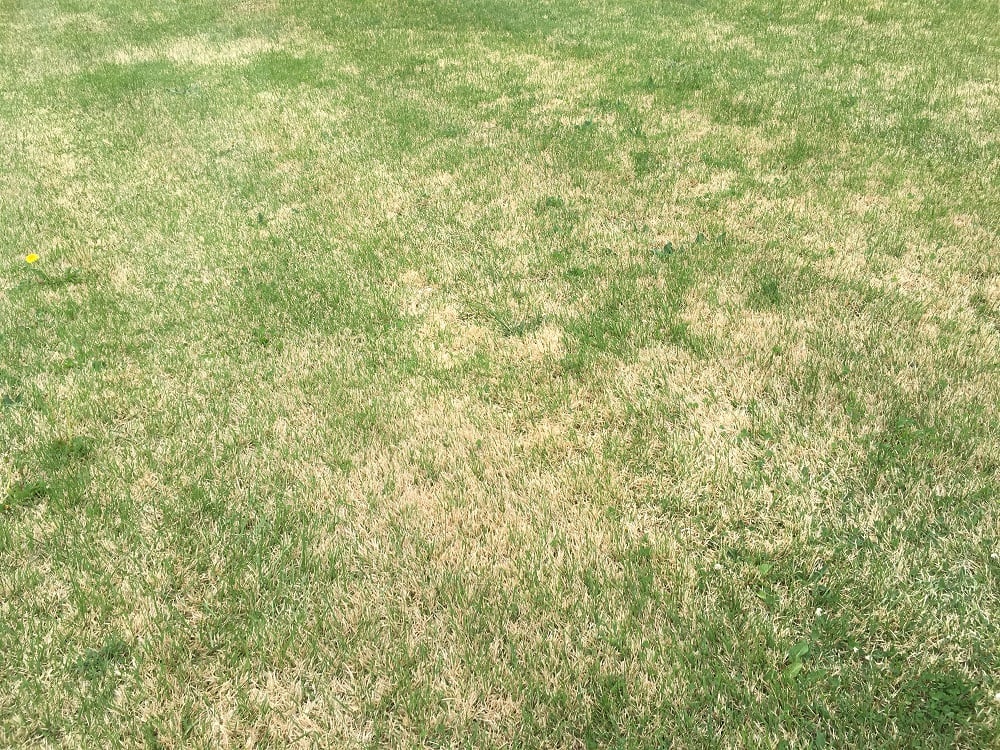
Few things are more frustrating than looking out at an otherwise healthy lawn and spotting a noticeable dead or bare patch. Your first instinct might be to grab a bag of grass seed and start spreading, but reseeding isn’t always the best place to start.
Before you repair the area, it’s important to understand why the grass died, how large the damaged area is, and what condition the soil is in. These factors can determine whether the best solution is reseeding, improving the soil, addressing an underlying lawn issue, or taking a different approach altogether.
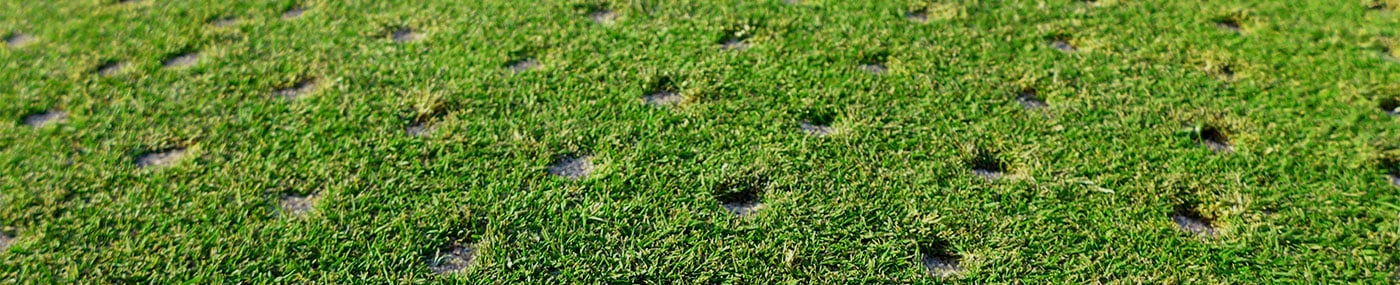
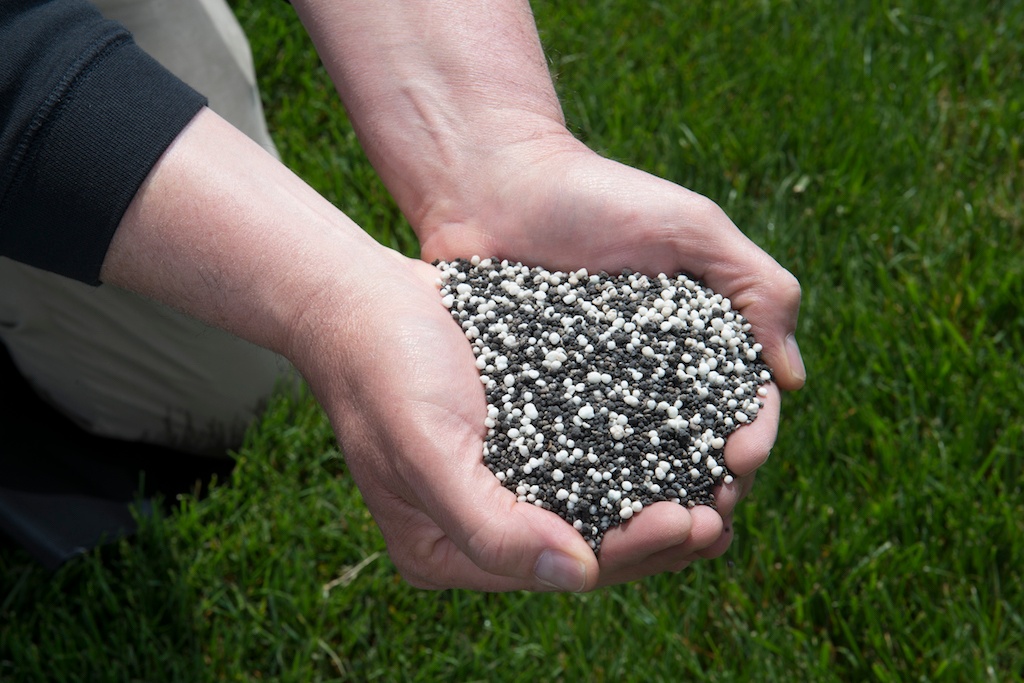
At Oasis Turf & Tree, we take a thoughtful approach to lawn care by identifying the underlying causes of lawn problems rather than simply treating the symptoms. We don’t just fill in dead grass patches and send you on your way. We work to address the soil problems contributing to those patches, so your grass has a healthier foundation to grow. For more than 30 years, we’ve used our custom fertilizer blends to help homeowners in Cincinnati, Dayton, and Northern Kentucky build healthier soil and stronger grass for lasting results. Premium lawn care services like our fertilization and double-pass core aeration and overseeding work together to improve growing conditions and establish new grass, addressing both the bare areas you see and the soil beneath them.
We’re here to walk you through a clear process for evaluating a bare or dead patch and determining the right next step to help your lawn recover and stay healthy.
Quick Answer: Dead grass can be caused by poor soil health, drainage problems, too much shade, pests or disease, or heavy foot traffic. Before repairing the area, identify and fix the underlying cause so the grass doesn’t die again. To fill in a small dead patch, remove the dead grass, prepare the soil, spread the appropriate grass seed, and keep the area consistently watered while the new grass establishes. If the patch is large, keeps returning, or you’re unsure what caused it, consider having a lawn care professional diagnose the problem.
In this article:
- Why Does Your Grass Die In The First Place?
- Can You Repair Bare or Damaged Areas of Your Lawn Yourself?
- What if Grass Keeps Dying in the Same Spot? Getting to the Root of the Cause.
- How to Fill in an Area With Dead Grass Step-by-Step
- How Long Does it Take for New Grass to Fill in?
- When Should You Actually Call a Lawn Care Professional?
- Frequently Asked Questions
Why Does Your Grass Die In The First Place?
Before repairing a bare or damaged area, it’s important to determine what caused the grass to die in the first place. Simply spreading new seed over the problem may provide temporary results, but if the underlying issue isn’t addressed, the new grass is unlikely to thrive for long. You’ll find yourself repeatedly repairing the same area until you identify and eliminate whatever is preventing the grass from growing.
Think of it like wearing a sweater that keeps getting caught on the same hook. You can keep pulling it free, but the problem will continue until you remove the hook or choose a different sweater. The same principle applies to your lawn: successful repair starts with addressing the root cause rather than just replacing the grass.
Common Causes of Dead or Bare Grass
- Heavy foot traffic
- Drought or heat stress
- Lawn disease
- Insects
- Weeds
- Poor soil conditions
- Too much shade
- Water drainage problems
- Compacted soil
- Pets frequently urinating or playing in the same spot
Can You Repair Bare or Damaged Areas Of Your Lawn Yourself?
You can repair bare spots yourself with a few simple tools and a little time. However, while some bare spots are easy to fix on your own, others may require professional attention to address the underlying issue and prevent the problem from returning.
|
DIY May Make Sense When… |
Why |
|
The area is relatively small |
Smaller patches are generally easier to prepare, seed, and maintain without requiring specialized equipment or extensive labor. |
|
The underlying problem has already been addressed |
Once the cause of the damage has been corrected, reseeding can be a practical way to help the grass recover and fill in. |
|
The surrounding grass is healthy |
Healthy grass around the damaged area can make it easier for new grass to blend in and establish successfully. |
|
You have the time to care for the new grass |
New seed needs consistent watering and attention while it establishes, so having the time to provide proper care can improve your results. |
If you decide your lawn problem is a good candidate for DIY repair, watch our YouTube video that offers helpful tips and step-by-step visuals to show beginners how to spot-seed a dead or bare patch of grass.
What if Grass Keeps Dying in the Same Spot? Getting To The Root Cause.
If you’ve tried reseeding a dead or bare area only to have the grass die again, it’s important to identify what’s causing the problem before attempting another reseeding. When grass repeatedly struggles in the same spot, there’s likely an underlying issue that needs to be addressed rather than simply adding more seed.
An underlying problem could be:
Poor Soil Health
Grass may continue to struggle if the soil beneath it lacks the nutrients needed to support healthy root growth. Compacted or depleted soil can make it difficult for new grass to establish, meaning reseeding alone may only provide a temporary solution. Improving the health and condition of the soil can help create a stronger foundation for long-term grass growth.
Drainage Problems
If water consistently pools in the same area or the soil stays overly wet, poor drainage could be preventing grass from establishing properly. Excess moisture can limit oxygen around the roots and create conditions where grass becomes weak and more susceptible to problems. Addressing the drainage issue first can help prevent the same patch from dying again.
Too Much Shade
Grass needs adequate sunlight to grow and stay healthy, so areas that receive limited sunlight may continue to struggle no matter how often they are reseeded. Shade from trees, buildings, fences, or other structures can make it difficult for grass to establish.
Pests or Disease
Insects and lawn diseases can damage or kill grass and may continue affecting the area even after new seed is planted. If the same spot repeatedly develops thinning, discoloration, or dead grass, look for signs of a pest or disease problem before reseeding. Identifying and addressing the source can help protect both the repaired area and the surrounding lawn.
How to Fill in an Area With Dead Grass Step-by-Step
For the new grass to establish successfully, you need to prepare the area properly, choose the right seed, and provide the care it needs as it grows.
Step 1: Remove the Dead Grass
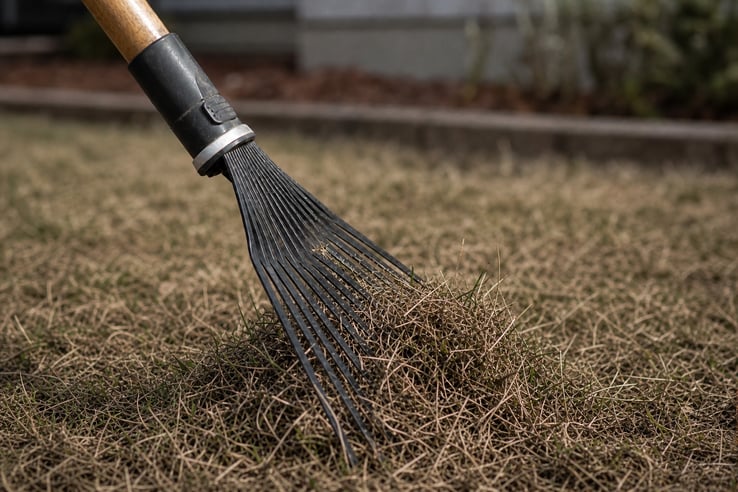
Start by clearing away the dead grass, weeds, and other debris covering the area. Use a rake or garden tool to remove as much of the dead material as possible so you can expose the soil underneath. This gives your new seed a clean surface to grow in and makes it easier to identify potential soil problems that may have contributed to the grass dying.
Step 2: Prepare the Soil
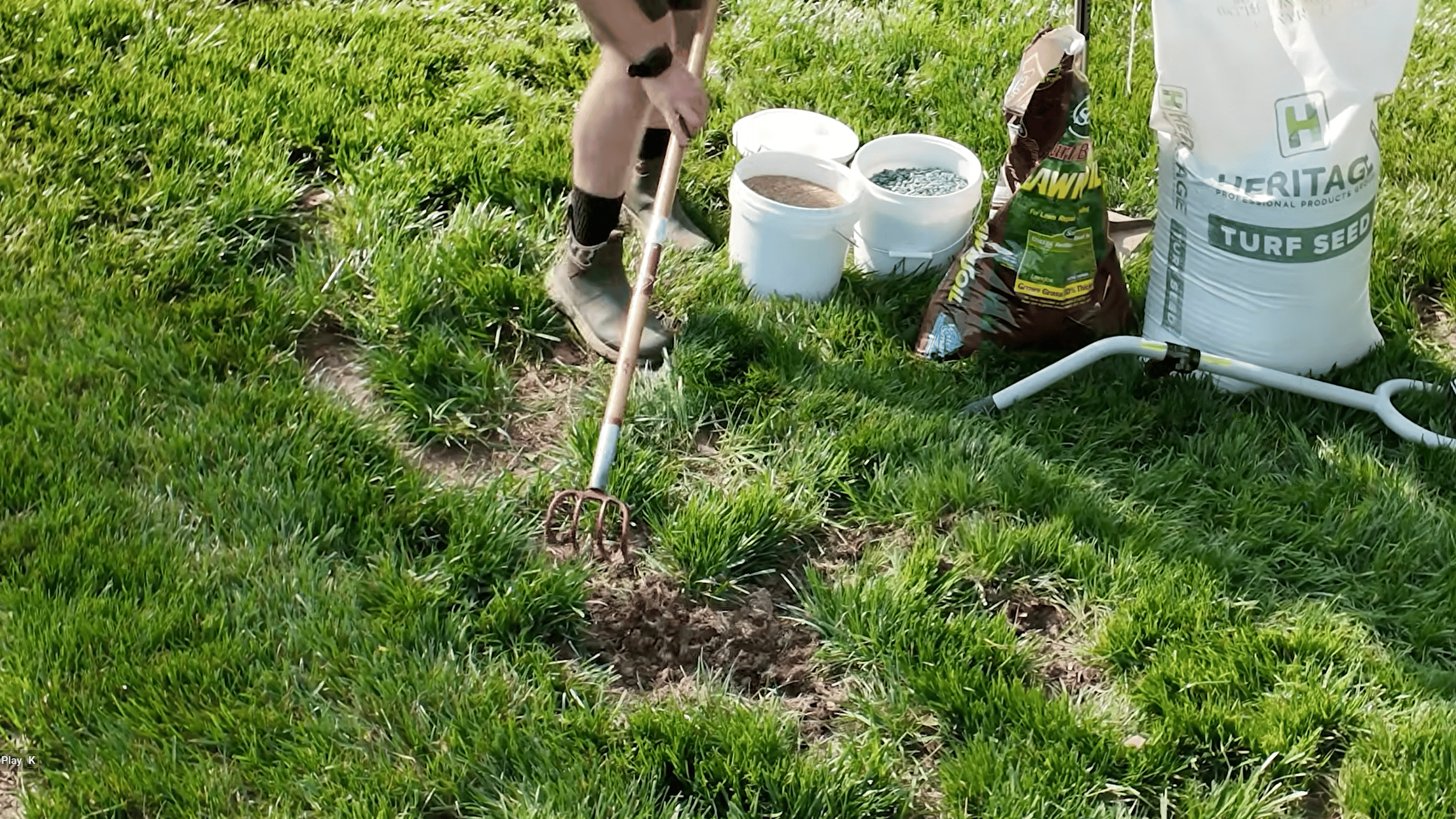
Once the area is cleared, loosen the top layer of soil with a rake or garden tool, especially if the soil is hard or compacted. Breaking up compacted soil helps create space for water, oxygen, and roots while giving the new seed better contact with the soil. If the underlying soil is poor, simply adding seed may not solve the problem.
Step 3: Choose the Right Grass Seed
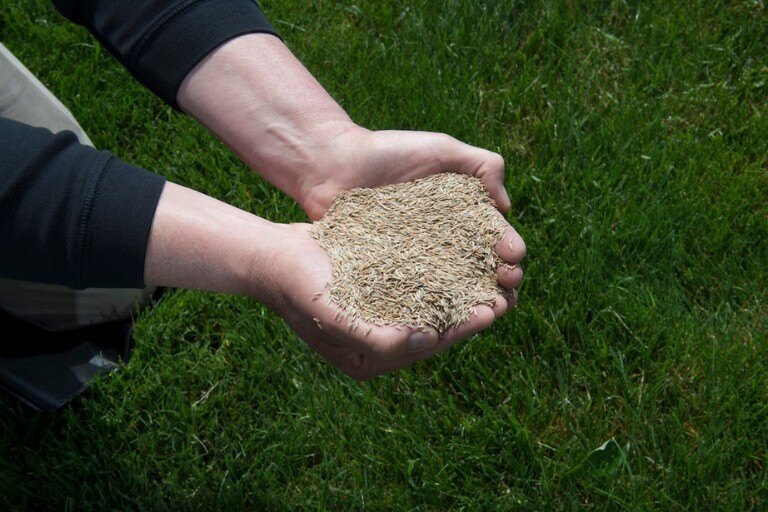
Choosing the right type of grass seed can make a big difference in how well the new grass blends into your existing lawn. Consider the grass already growing in your yard, along with factors such as sunlight, shade, and how much traffic the area receives. Choosing a seed that matches your existing turf will help create a more consistent appearance and improve the chances of successful establishment.
The recommended grass type for lawns in Cincinnati, Dayton, & Northern Kentucky is Turf Type Tall Fescue because it’s the most resistant cool-season grass to heat, insects, and daily wear from frequent activity.
Why do we recommend Turf Type Tall Fescue for your lawn? Listen as two of our lawn care experts explain what makes this grass variety a great choice and why it performs so well in our area.
Watch now: What Grass is the Best for YOUR Lawn? (Turf Type Tall Fescue)
Step 4: Spread the Seed
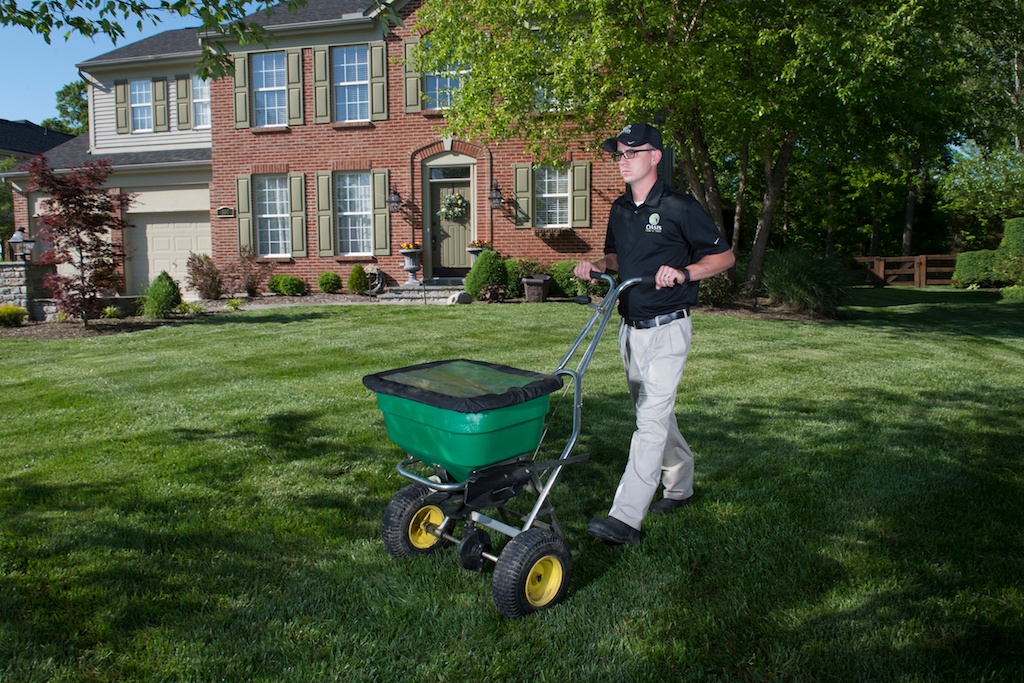
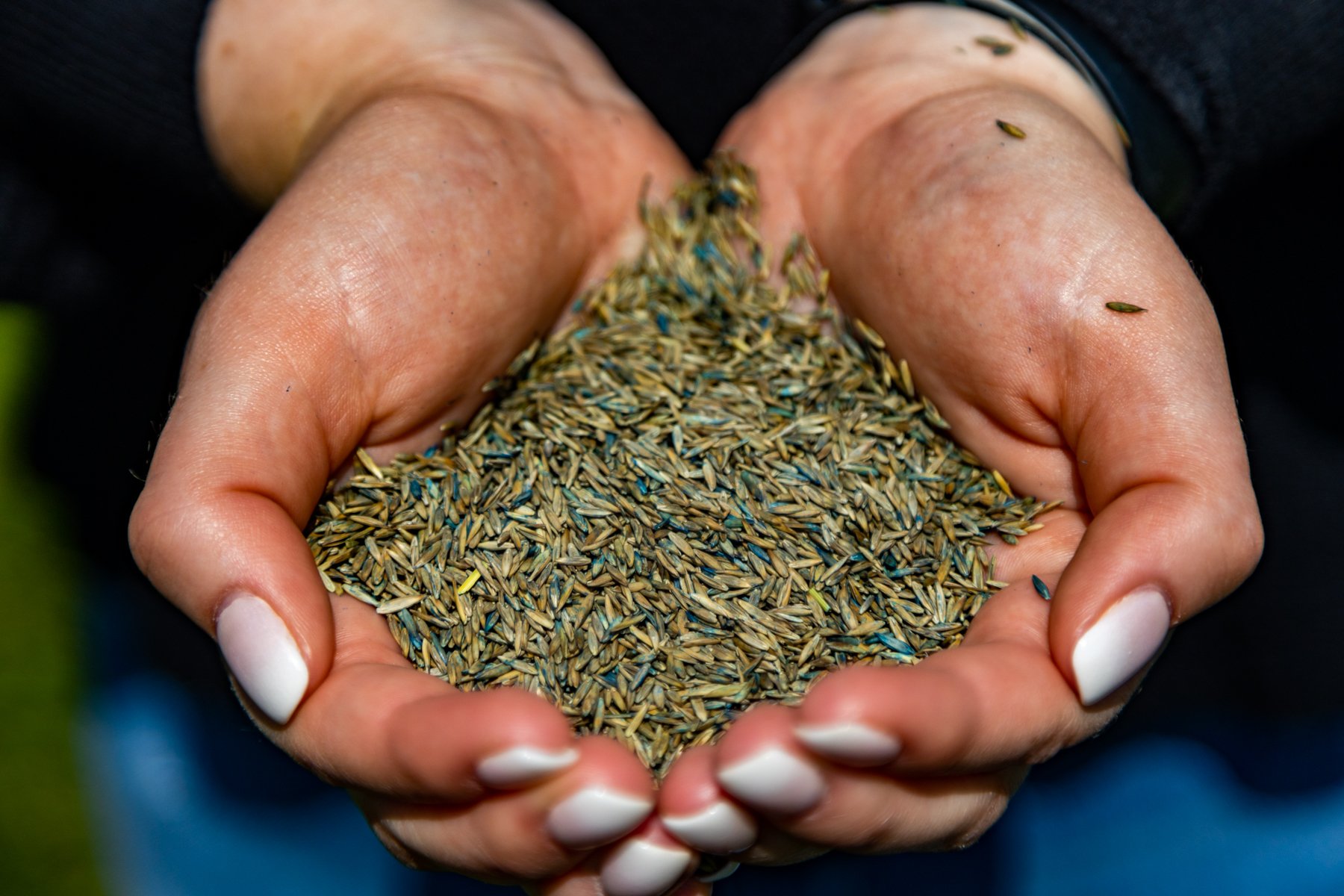
Spread the grass seed evenly across the prepared area, following the recommended seeding rate for the specific grass variety. Too little seed can leave gaps, while too much can cause seedlings to compete for water, nutrients, and space. After spreading, lightly rake the area to help work the seed into the soil and improve seed-to-soil contact.
Step 5: Keep the Area Consistently Watered
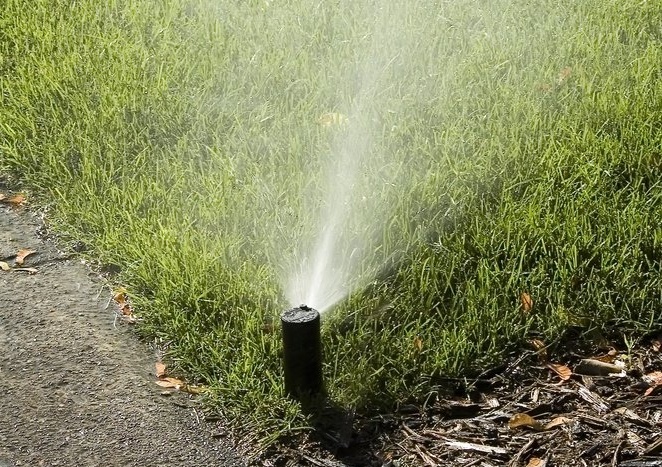
New grass needs consistent moisture while its roots are developing. Keep the soil surface moist, but avoid soaking the area to the point that water pools on the top or washes the seed away. Depending on weather conditions, this may mean watering more frequently with lighter amounts of water. As the grass becomes established, gradually adjust your watering habits to encourage deeper root growth.
Want to learn more about proper watering habits, including when to water, how much water your lawn needs, and why these recommendations matter? In this YouTube video, we walk you through how to properly water your lawn, how much water it needs, and how to recognize the signs that your lawn may need more water.
Step 6: Maintain the New Grass as it Grows
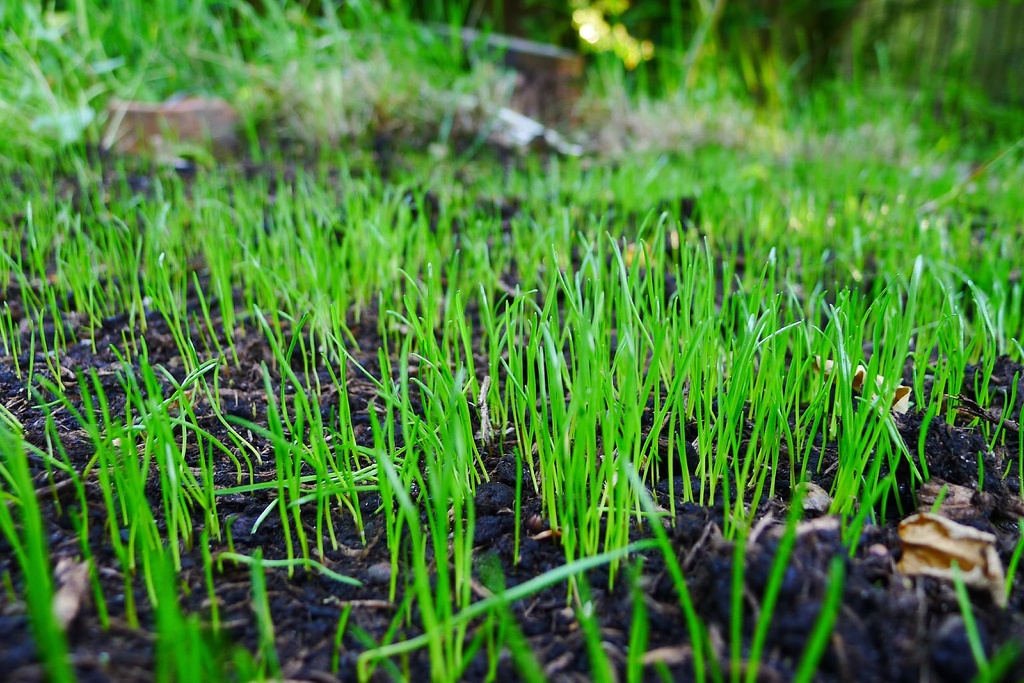
Once the new grass begins growing, continue treating the area as part of your lawn. Avoid mowing too soon and give the new grass enough time to establish. When the new grass is ready to mow, use a sharp mower blade and avoid removing too much of the grass blade at once. Consistent mowing, watering, and proper lawn care will help the repaired area blend in with the rest of your lawn.
How Long Does it Take for New Grass to Fill in?
New grass growth is typically noticeable within 14-21 days. However, achieving full establishment and maturity can take up to 18 months, or roughly two full growing seasons. The timeline and results can vary depending on several factors, including:
- Weather conditions
- Watering habits
- Soil condition
Every lawn is different, so it’s important to approach each one based on its unique needs and current condition. Tailoring lawn care to these factors gives your grass the best opportunity to establish, thrive, and grow strong.
When Should You Actually Call a Lawn Care Professional?
It can be difficult to determine when a lawn care problem requires professional help. In some cases, calling a lawn care professional is the best way to properly diagnose the issue and determine the right solution. Consider professional intervention if:
|
Professional Care Makes Sense When… |
Why |
|
The dead area keeps returning |
Repeated damage can point to an underlying issue that reseeding alone will not fix. A professional can help identify the cause and recommend the right solution. |
|
There are multiple large areas of dead grass |
Larger or widespread areas may require more extensive treatment than a DIY repair. |
|
You aren't sure what caused the damage |
Different problems can create similar symptoms. Properly identifying the cause helps ensure you choose a solution that addresses the problem rather than covering it up. |
|
Drainage or soil conditions are contributing to the problem |
Issues like poor drainage, compacted soil, or poor soil health can prevent new grass from establishing. A professional can evaluate these conditions and recommend ways to improve them. |
To best repair your lawn, whether you decide to take on the repairs yourself or hire a professional, it’s important that the root cause of the damage is found before beginning to repair. If you’re doing it yourself:
- Start by identifying the cause
- Prepare the area
- Reseed and repair
- Establish new grass
- Continue monitoring the area
If you’re not ready to commit to a lawn care service, you may be wondering what you can expect to pay. You can learn more without making any commitment by reading our article to see how Oasis Turf & Tree’s pricing compares to other local lawn care companies and what factors can affect the cost of lawn care.
If you want to bring in a professional, Oasis Turf & Tree can help diagnose the cause of your lawn problems and repair your grass from the ground up. By focusing on soil health, we address the underlying issues that can prevent grass from growing strong and healthy. To get a quote, fill out a quick form on our website.
Frequently Asked Questions
How do I know if my grass is dead or dormant?
One simple way to check is to gently pull on the grass. If it comes up easily from the soil or feels dry and brittle, it may be dead. If you are unsure, a lawn care professional can help determine whether the grass is dormant or needs to be replaced.
What is the best time of year to repair dead grass?
Fall is often the best time to repair dead or damaged grass. Fall seeding gives the new grass time to develop a strong root system before the stress of summer heat.
Will fertilizer bring back dead grass?
No, fertilizer cannot bring completely dead grass back to life. It provides nutrients that support healthy, actively growing grass, but it does not replace already dead grass.
How long does it take for new grass to grow in a dead spot?
The amount of time it takes depends on factors such as the type of grass, soil conditions, temperature, moisture, and how well the area is cared for after seeding. With favorable conditions, new grass may begin germinating within a couple of weeks, but it can take several weeks or longer for the area to fill in and become established.
Topics: