

A thin, weedy lawn can leave you wondering where to start: should you kill the weeds first, or can you put down grass seed and weed control at the same time? The answer isn't always straightforward. Some weed-control products can interfere with new grass seed, while others may be appropriate for certain situations.
At Oasis Turf & Tree, we know that growing a healthy lawn takes more than throwing down seed and hoping for the best. Our team of 60+ licensed lawn care experts understands the challenges of maintaining healthy grass in Cincinnati, Dayton, and Northern Kentucky, from choosing the right grass seed to knowing when a weed treatment can be applied safely.
We’re here to explain when grass seed and weed control can be applied at the same time, when to address weeds before or after seeding, and what to consider when choosing a treatment.
Quick Answer: At Oasis Turf & Tree, we don’t recommend seeding and weed control at the same time because some weed control products can interfere with successful seed germination, making it difficult for new grass to establish. Spot spraying small areas may be done, but entire-property treatments are discouraged. When you should seed and when you should control weeds depends on the condition of your lawn, the time of year, and the type of weed. If weeds appear after you put down grass seed, it’s important not to treat your lawn until at least 3 weeks after seeding to avoid interfering with the germination process. However, you should always identify the weed, check your grass’ growth stage, and read the label of the intended weed control product to determine the best course of action.
In this article:
- Can You Apply Weed Control & Grass Seed at the Same Time?
- How Does Weed Control Interfere With New Grass Seed?
- When Should You Seed & When Should You Focus on Controlling Weeds? Factors to Consider.
- What Weed Control Products Can You Use While Seeding?
- What if Weeds Appear After You Put Down Grass Seed? Steps to Follow
- When Should I Actually Reach Out to a Professional?
- Frequently Asked Questions
Can You Apply Weed Control & Grass Seed at the Same Time?
Generally, we don’t recommend applying weed control and grass seed at the same time.
Weed control products can interfere with seed germination, making it harder for new grass to establish successfully. While spot-treating small areas of weeds may be less harmful in some cases, we recommend avoiding whole-property weed control applications during the two weeks before and three weeks after seeding. This gives your grass seed the best opportunity to germinate and establish a healthy lawn.
How Does Weed Control Interfere With New Grass Seed?
Weed control can interfere with new grass seed because products designed to stop unwanted plants from growing may also affect newly germinating grass. Depending on the product, weed control can slow or prevent seed germination, reducing the number of new grass plants that successfully establish.
Other products may not interfere with the seed itself but can harm young grass after it sprouts, when the plants are still developing their root systems and are more vulnerable to stress.
Newly germinated grass needs time to develop strong roots and establish healthy growth before it can withstand certain weed control treatments. We typically recommend customers wait at least 3 weeks to use weed control products on new grass. Applying the wrong product too early can damage young grass or limit its ability to compete with weeds. This is why choosing the right timing and product is important when seeding your lawn. Waiting until the new grass is established helps give it the best opportunity to grow healthily.
When Should You Seed Your Lawn & When Should You Focus on Controlling Weeds? Factors To Consider.
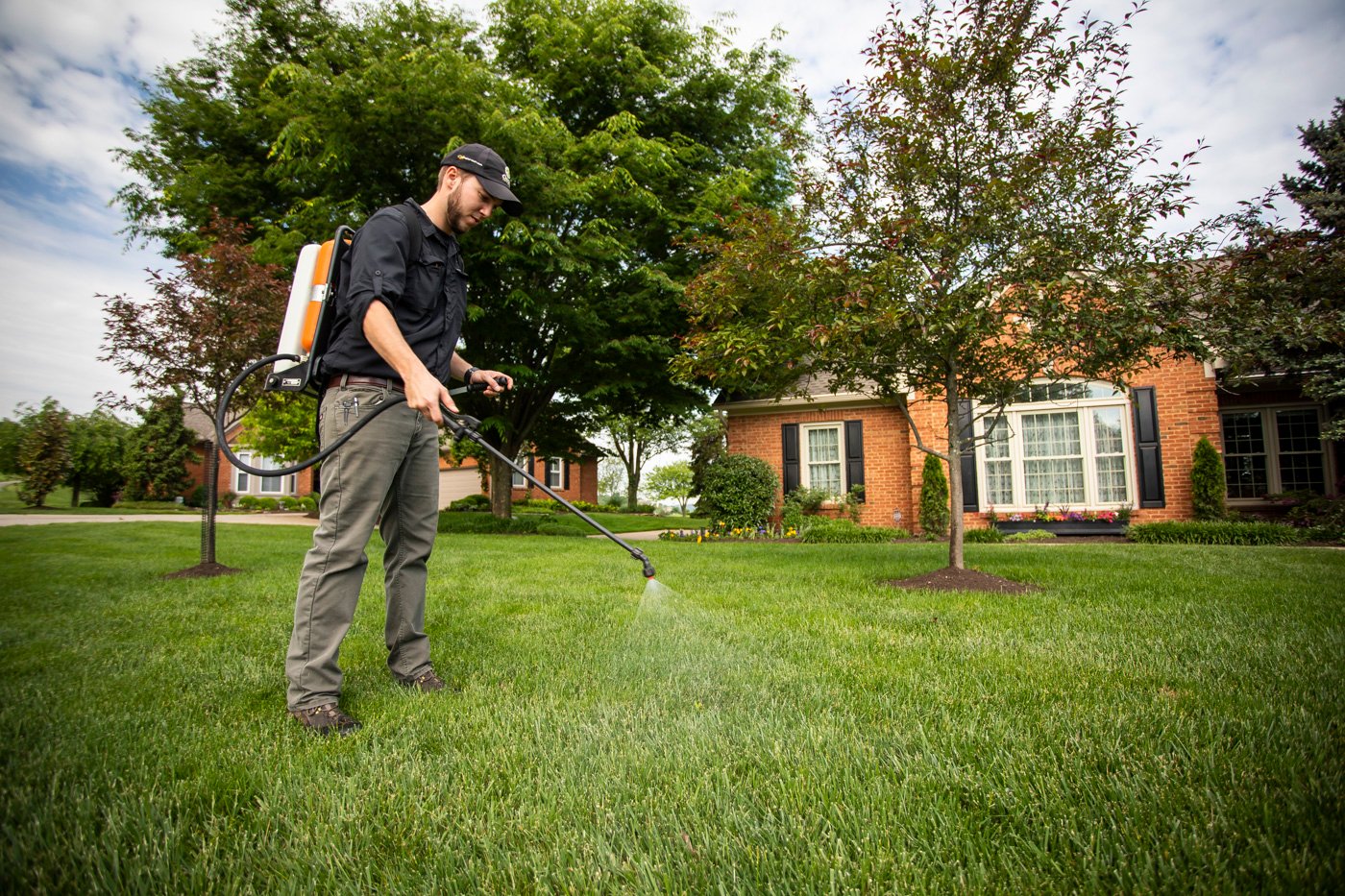
The right time to seed or control weeds depends on your lawn’s condition, the type of weeds present, and the time of year. Whether you’re filling in bare spots, improving thin grass, or preparing for a healthier lawn next spring, it’s important to understand how these treatments work together.
Want to learn more about when to seed your lawn and when to control weeds? The good news is we also made a YouTube video where we explain the best time to seed, when to apply fall weed control, and how weed control products can affect new grass seed.
Time of Year
The time of year is an important factor when deciding whether to seed your lawn or control weeds. For cool-season lawns in Cincinnati, Dayton, and Northern Kentucky, fall is the ideal time to seed because favorable soil temperatures and weather conditions give new grass the best chance to establish. Spring seeding is generally not recommended because new grass has less time to develop before summer heat and drought create challenging growing conditions. With only one ideal seeding window, it’s important to plan weed control carefully.
Want to know if you have a cool-season grass variety? Check out our YouTube video, where we walk you through how to identify the different cool-season grasses commonly found in Cincinnati, Dayton, and Northern Kentucky.
Type of Weed
Different weeds are best controlled at different times of year. Wild Violet and Ground Ivy are best controlled in the fall, but as previously mentioned, fall is also the ideal time to seed cool-season lawns. This creates a challenge for homeowners who want to eliminate weeds while giving new grass the best chance to establish.
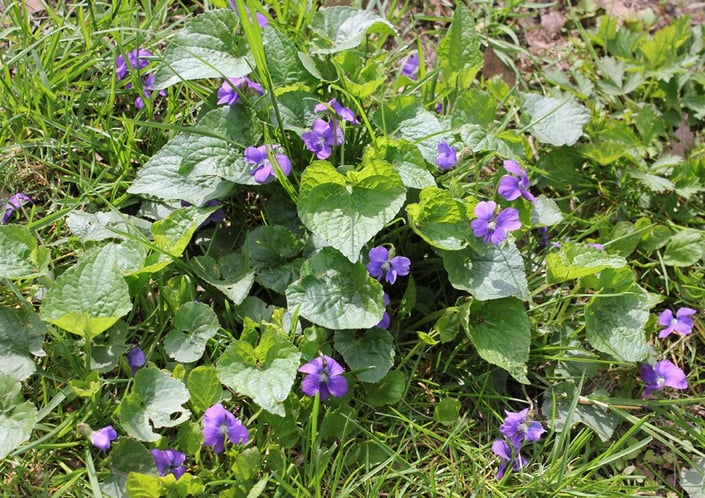
Because Wild Violet and Ground Ivy have a waxy coating that makes them more difficult to control during the summer, we recommend addressing these weeds before seeding to have the best chance of eliminating them.
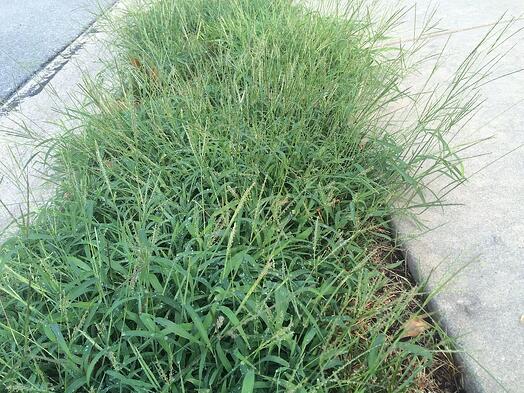
For broadleaf weeds like crabgrass, we recommend prioritizing seeding before weed control. The best way to prevent crabgrass from taking over your lawn the following year is to establish thick, healthy turf. Fuller grass creates more competition for space, nutrients, and sunlight, leaving fewer opportunities for weeds to infiltrate.
By understanding which weeds to control before seeding and which to prioritize afterward, you can create a more effective lawn care plan that supports both weed prevention and healthy grass growth.
Condition of Your Lawn
The condition of your lawn plays an important role in deciding when to seed and when to control weeds. If your lawn has thin or bare areas, seeding may be the priority to establish thicker, healthier turf. However, if weeds are already competing with your grass for space, nutrients, and sunlight, addressing those weeds first may help your new seed establish more successfully.
What Weed Control Products Can You Use While Seeding?
If you are planning to seed your lawn, choosing the right weed control product is just as important as choosing the right grass seed. Applying the wrong product at the wrong time can interfere with germination and damage new grass. The best approach depends on the weeds you are trying to control, grass type, and the product’s label instructions.
Weed control products generally fall into two categories: pre-emergent herbicides and post-emergent herbicides. Each category works differently, and not every product is safe to use when planting grass seed.
|
Product Type |
What it Does |
What You Should Check Before Using It |
|
Pre-emergent Herbicide |
Prevents certain weed seeds from germinating. |
Check whether the product can be applied before or after grass seed germination. Many pre-emergents create a barrier that can also prevent desirable grass seed from establishing. |
|
Post-emergent Herbicide |
Controls weeds that are already growing. |
Check whether the label permits use on newly seeded or immature turf. Some products require new grass to be established or mowed a certain number of times before application. |
|
Selective Herbicide |
Targets specific weeds while allowing certain grass types to remain unharmed. |
Confirm that the product is labeled for your grass species and the weeds you want to control. A product safe for one grass type may injure another. |
|
Non-selective Herbicide |
Controls most plants it contacts, including desirable grass. |
Check whether the product is intended for spot treatment or complete vegetation removal. Keep it away from grass you want to preserve. |
Make Sure To Pay Attention To Your Grass Type
The type of grass seed you choose affects which weed control products you can use. Different grass species have different levels of tolerance to different herbicides, and some products are labeled for only specific types of grass.
For lawns in Cincinnati, Dayton, and Northern Kentucky, Turf Type Tall Fescue, a cool-season grass, is the most popular grass type in our area. When seeding this type of grass, homeowners should look for products specifically labeled for tall fescue or other cool-season grasses.
The same principle applies to other grass types, including Kentucky bluegrass, perennial ryegrass, and warm-season grasses such as Bermuda. Always confirm that the product is labeled for the grass you are planting rather than assuming that a product safe for one lawn will work for another.
What to Check on the Product Label
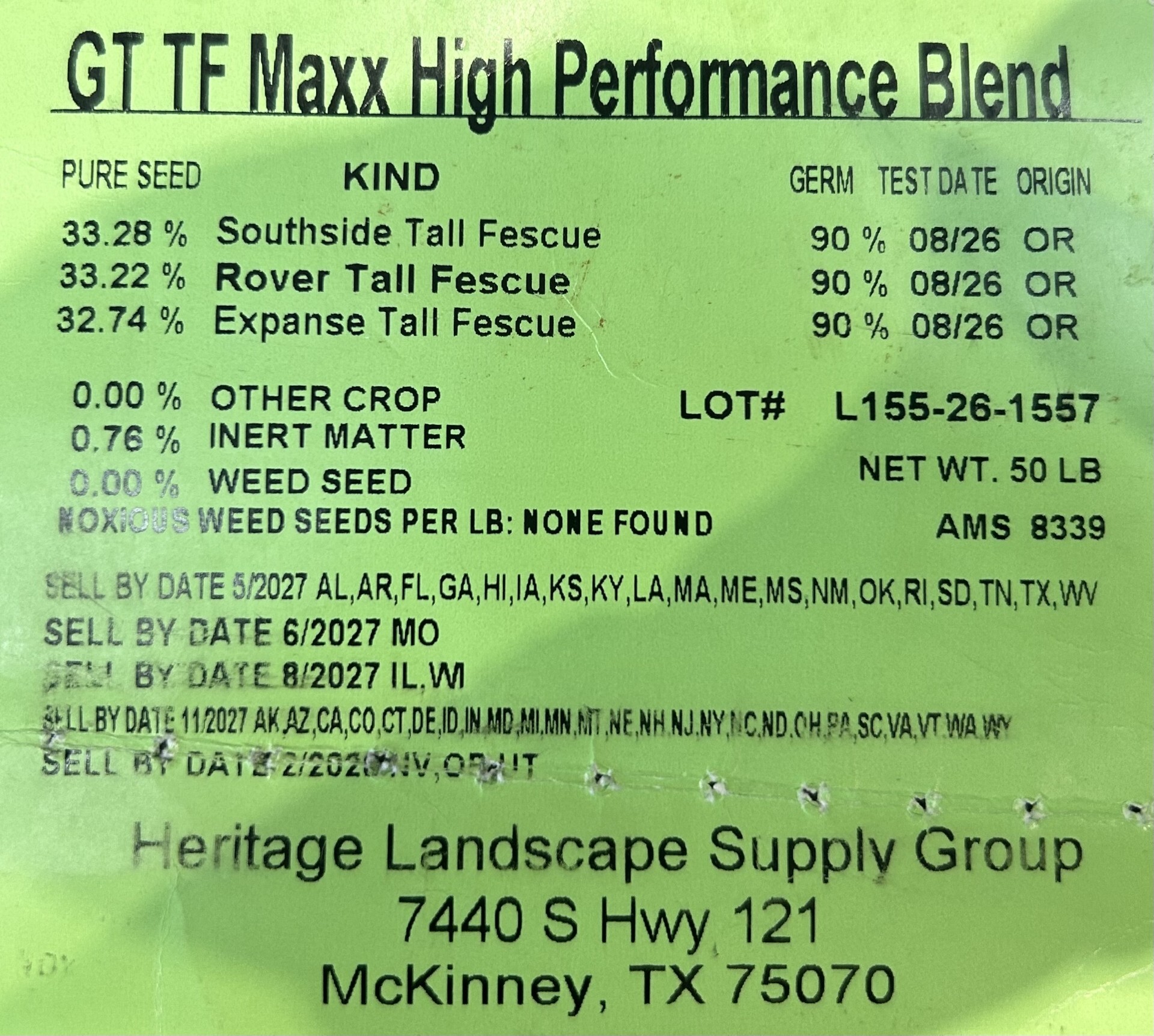
Before applying any weed control product around new grass seed, it’s important to check for:
- Grass species - Does the label specifically list your grass type?
- Seeding restrictions - Does it say how long to wait before or after seeding?
- Establishment requirements - Does new grass need to be mowed a certain number of times or reach a particular growth stage?
- Weed restrictions - Is the product effective against the weeds you are trying to control?
- Application timing - Is it intended for use before weeds emerge, after weeds emerge, or both?
- Weather and application conditions -Are there restrictions related to temperature, rainfall, or other conditions?
The label is the best source for determining whether a product is appropriate for your lawn. If the instructions are unclear, contact the product manufacturer or a licensed lawn care professional before applying it.
What If Weeds Appear After You Put Down Grass Seed? Steps To Follow
.jpg?width=8192&height=5464&name=Grass-Weed%20(20).jpg)
If weeds appear after you plant grass seed, it’s important not to treat your entire property with weed control products. You can spot-spray weeds before the 3-week mark, but we recommend waiting at least 3 weeks before applying weed control to the entire lawn. As stated earlier, this is because weed control products can severely damage new grass and stunt its growth, delaying or even completely compromising desired results.
Regardless of which approach you choose, it’s important to follow these steps:
Identify the Weed
Before applying any weed control, determine what type of weed is growing in your newly seeded lawn. Knowing what you’re dealing with helps you determine whether the weed needs immediate attention or can wait until your grass is more established.
Want to learn how to identify weeds on your own? Check out our YouTube series to discover what different types of weeds look like, where they grow, and how to keep them under control.
Check Your Grass’ Growth Stage
Newly planted grass is more sensitive to weed control products than established turf. If your grass seed has just germinated, applying weed control too soon can interfere with its development. Wait until the new grass has reached the growth stage specified on the product label before considering treatment.
To know if your grass has reached the specific growth stage mentioned on a product label, look for physical structural markers on the grass plant. Product labels usually define these milestones by visual structures like leaves, tillers, or grass height.
Read the Weed Control Product Label
Not every weed control product is safe to use on newly seeded grass. Check the label for restrictions related to new seed, grass type, and application timing. Some products require you to wait a specific number of days or weeks after seeding before application, while others may not be suitable for certain types of grass.
Choose the Appropriate Course of Action
Once you know what weed you have and whether your grass is established enough for treatment, decide which approach makes the most sense: wait, hand-pull weeds, or use an appropriate treatment if applicable.
When Should I Actually Reach Out to a Professional?
If you’re struggling to decide whether you should seed your lawn or control your weeds, checking with a professional can provide valuable insight into the best course of action for your property. If you’re confident in your ability to complete the desired services yourself, contacting a professional may not be completely necessary.
At Oasis Turf & Tree, we’ll answer any questions you may have by phone at (513) 697-9090. If you decide you’re ready to request a quote and explore the lawn care services we offer to help you control weeds and achieve a healthier, fuller lawn, you can fill out a quick form to get a free quote from us.
Just want to learn more? Explore our learning center, packed with seasonal tips, weed identification videos, helpful guides, beginner instructions, and explanatory videos to help you better understand lawn maintenance, when to invest in it, and why professional care is useful.
Frequently Asked Questions
How long does grass seed take to germinate?
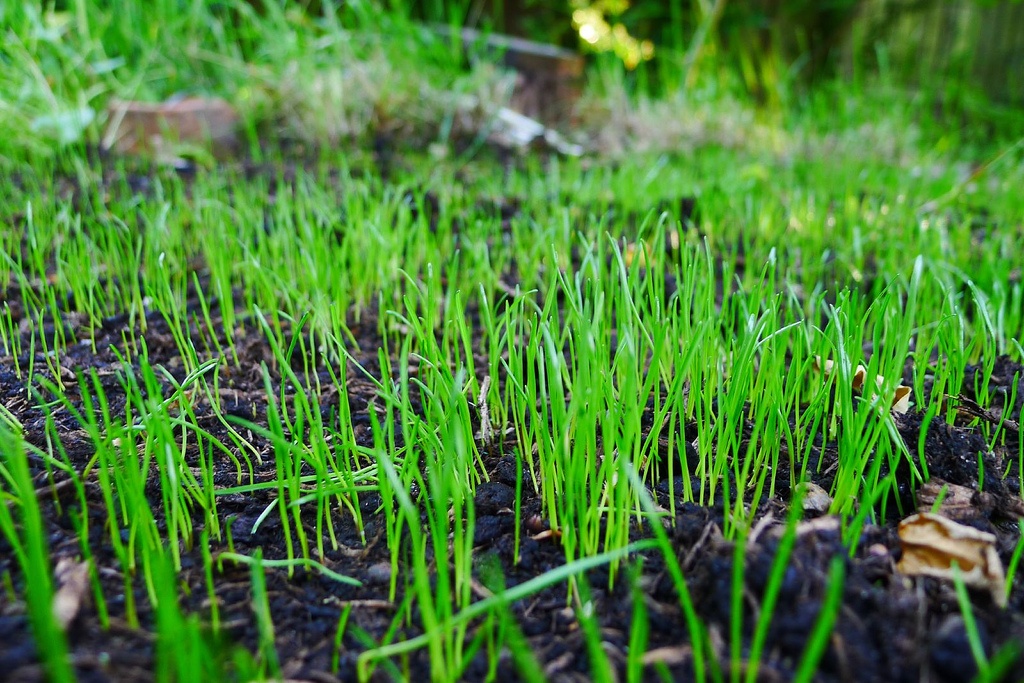
Turf Type Tall Fescue seed typically takes around 14–21 days to germinate under favorable conditions. New grass may still need additional time to develop a strong root system and mature, so avoid treating seedlings with weed control products unless the label allows it.
What happens if I seed my lawn at the wrong time?
Seeding outside favorable conditions can make it more difficult for grass to germinate and establish. Spring-seeded cool-season grass has less time to develop before summer heat, while seeding too late in fall may not give the grass enough time to establish before winter.
Why is my new grass growing but my weeds are growing faster?
Weeds often grow faster than new grass because they can establish quickly and compete with young seedlings for sunlight, water, and nutrients. New grass needs time to develop a strong root system, while weeds may already be established in the soil.
How often should I seed my lawn?
Not every lawn needs to be seeded every year. If your lawn is healthy and has good grass coverage, annual seeding may not be necessary. However, at Oasis, we recommend aerating your lawn once a year to help improve soil conditions and support healthy grass growth.
Topics:
.jpg?width=2048&height=1365&name=NALP_Gayle_Lawn_Pictures%20(34).jpg)


.jpg?width=2048&height=1365&name=NALP_Gayle_Lawn_Pictures%20(34).jpg)

.jpg?width=2048&height=1366&name=NALP_Gayle_Lawn_Pictures%20(8).jpg)


.jpg?width=2048&height=1366&name=NALP_Gayle_Lawn_Pictures%20(9).jpg)