
Your trees have dropped their leaves, your shrubs aren’t putting on much growth, and your landscape looks like it’s settling in for winter. So why would it still need fertilizer?
It’s a fair question. When you can’t see much happening above ground, another treatment can seem unnecessary. You want to know that the care you’re paying for serves a purpose.
At Oasis Turf & Tree, we pay attention to what’s happening beneath your plants, too. When plants in local landscapes weren’t responding as well as expected, we investigated soil conditions and identified manganese deficiencies in the landscapes we tested. Those findings helped shape our approach to tree and shrub nutrition throughout Cincinnati, Dayton, & Northern Kentucky. Our final Tree & Shrub Care visit builds on that approach, delivering nutrients into the root zone of deciduous plants (plants that lose their leaves in the fall) as they prepare for winter.
We’re here to explain how the treatment works, what we look for during the visit, and how it supports your landscape heading into spring.
Quick Answer: Deep root fertilization delivers liquid fertilizer beneath the soil surface around your trees and shrubs. Oasis’s final seasonal feeding focuses on deciduous plants, supplying nutrients as they transition toward winter and preparing them for the next growing season. We also inspect plant health and provide recommendations for watering, pruning, and other care.
In this article:
- What Is Deep Root Fertilization?
- Why Do Trees and Shrubs Still Need Attention After Leaves Fall?
- What Is in Oasis’s Deep Root Fertilization Treatment?
- When Does Oasis Complete Fall Deep Root Fertilization?
- What Do We Inspect During the Final Deep-Root Fertilization Treatment?
- What Results Should You Expect From Deep-Root Fertilization?
- How Can You Help Prepare Your Landscape for Winter?
- When Can I Sign Up For Tree & Shrub Care?
- Frequently Asked Questions
What Is Deep Root Fertilization?
Deep root fertilization is a method of applying nutrients beneath the soil surface, where plant roots can access them.
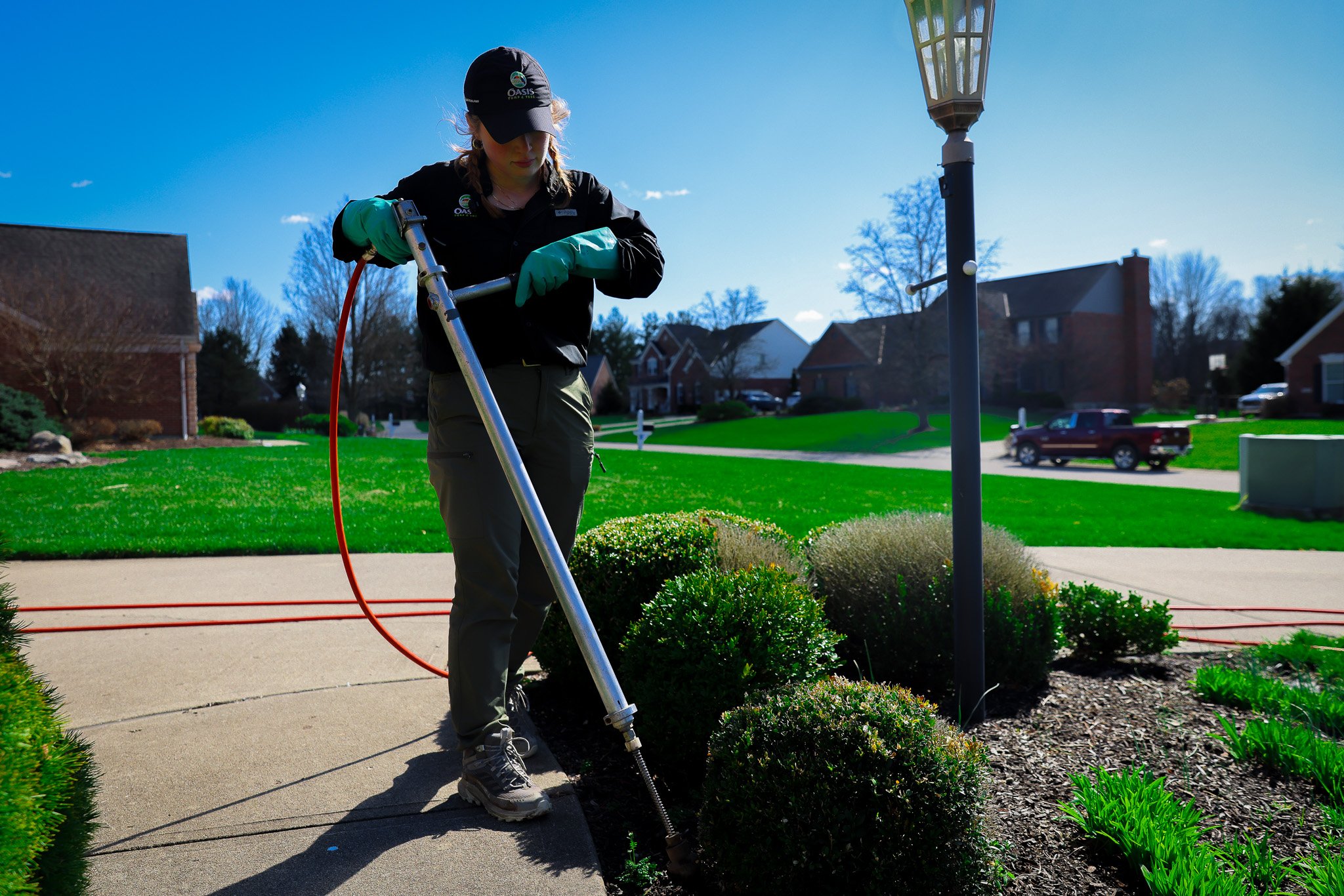
At Oasis, we use a liquid fertilizer and a specialized injection tool that reaches into the soil around a tree or shrub. We make multiple applications around the plant, working within the area beneath the outer branches, known as the drip line. The number of application points depends on the plant’s size.
This places the solution into the root zone rather than leaving it on top of the landscape bed.
Why Does Placement Matter?
The roots taking up water and nutrients extend outward through the soil. Many are relatively close to the surface, so effective placement means reaching those absorbing roots. Despite the name, deep root fertilization doesn’t mean putting nutrients several feet underground. Applying fertilizer below the roots would miss much of the area where uptake occurs.
Our deep root feeding does not relieve soil compaction. If compacted soil is limiting root growth or water movement, that concern needs separate attention.
Why Do Trees and Shrubs Still Need Attention After Leaves Fall?
A tree without leaves can look completely inactive. But dormancy doesn’t mean the plant has stopped being affected by its surroundings.
Roots can continue growing and taking up nutrients while soil conditions remain suitable, even after growth above ground has slowed. Your trees and shrubs are still living plants with moisture and nutritional needs.
Once a deciduous plant loses its leaves, it has much less opportunity to make new sugars through photosynthesis. It relies on stored resources to maintain itself and support growth when spring arrives. Fertilizer supplies mineral nutrients that support those normal plant functions. Appropriate fall feeding can provide nutrients that plants retain for future growth.
How Late-Season Care Supports Your Landscape
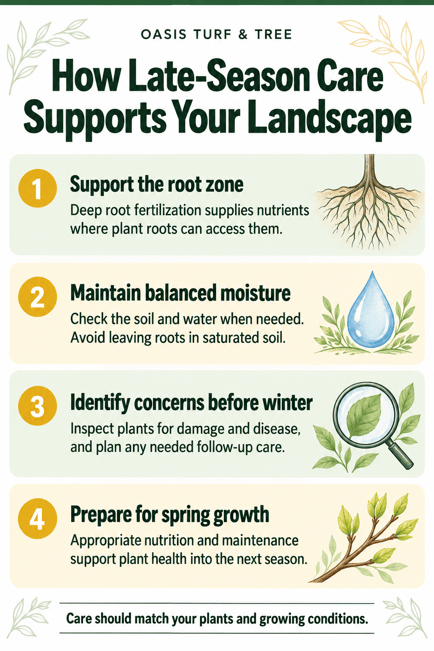
Oasis Turf & Tree infographic showing how late-season care supports roots, balances soil moisture, identifies winter concerns, and prepares plants for spring growth.
What is in Oasis’s Deep Root Fertilization Treatment?
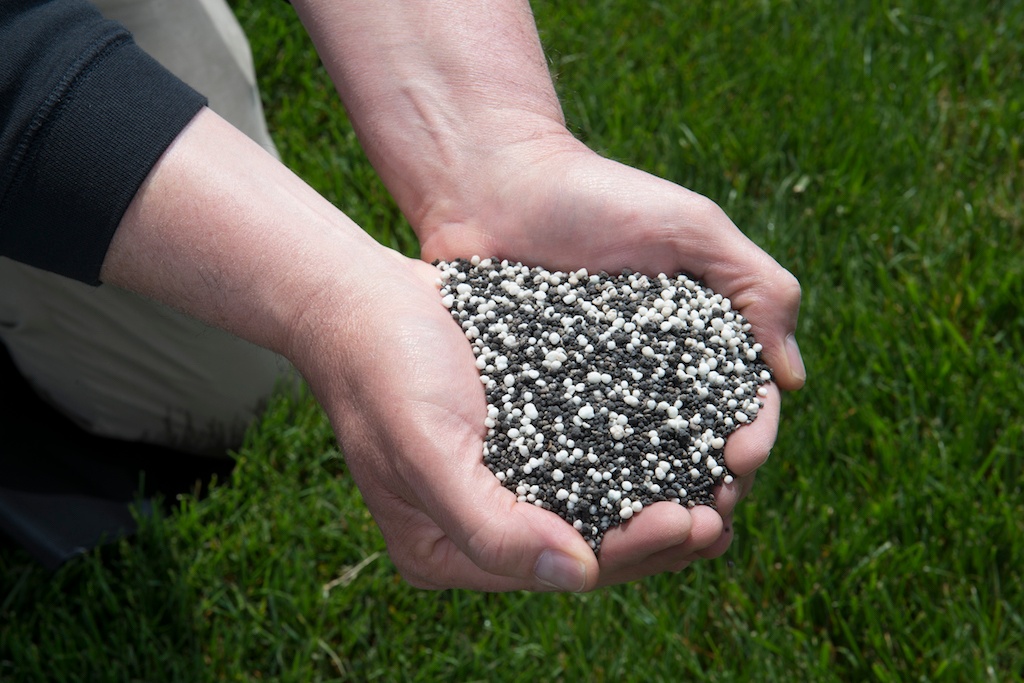
Our treatment uses a 20-20-20 fertilizer blend, meaning it has 20% Nitrogen, 20% Phosphorus, & 20% Potassium. We also include additional minerals and a bio-inoculant, or a product containing beneficial microorganisms, such as bacteria or fungi, intended to introduce beneficial microbes into the soil.
Each part has a different purpose:
|
Fertilizer Component |
Its Role |
|
Nitrogen, phosphorus, and potassium |
|
|
Manganese |
|
|
Additional minerals |
|
|
Bio-inoculant |
|
Why We Added Manganese
A few years ago, we noticed that some landscape plants weren’t responding as well as expected. We tested soils in local landscapes in Cincinnati, Dayton, & Northern Kentucky and found manganese deficiencies in the sites sampled.
Manganese is needed in small amounts, but it plays an important role in photosynthesis, the process plants use to turn sunlight into energy. A shortage can interfere with healthy growth.
One possible sign is yellowing between the leaf veins while the veins remain green. However, other nutrient problems can look similar, so leaf color alone doesn’t confirm a manganese deficiency.
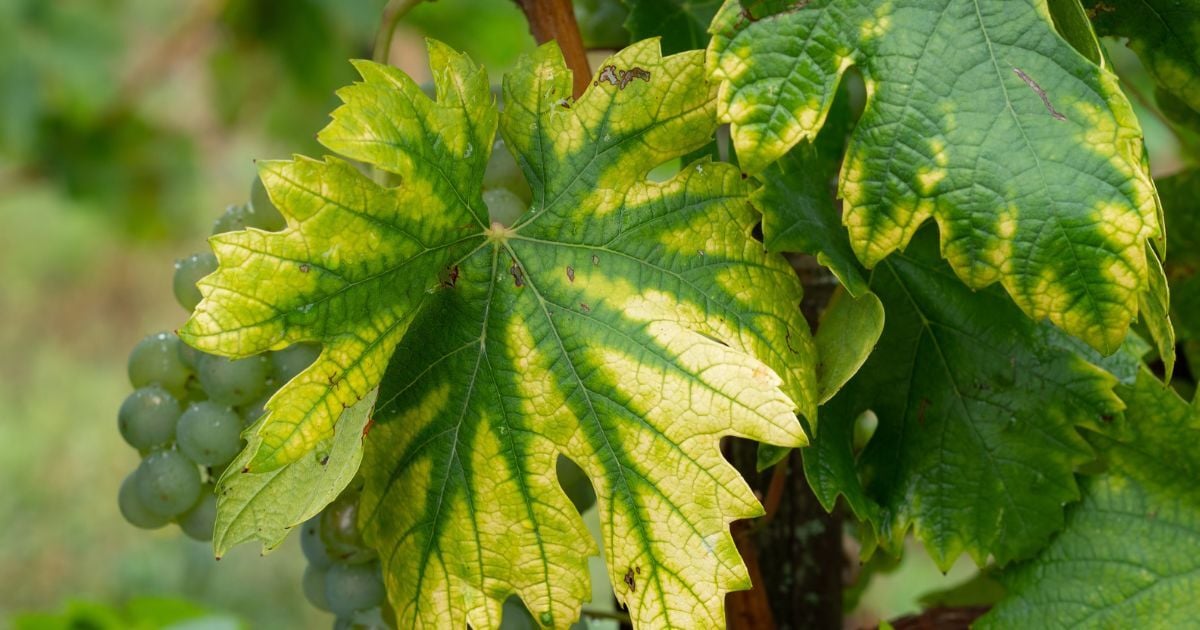
That experience reinforced the value of investigating why a plant is struggling. Our nutritional approach reflects what we’ve learned from the landscapes we care for, while individual plant conditions still matter.
Want to learn more about what deep root feeding involves? We made a video that goes over how this treatment supports root health and carbohydrate storage, what’s included in this round, and why we recommend deep root fertilization in the first place.
When Does Oasis Complete Fall Deep Root Fertilization?
We generally complete our final deep root feeding from November through the end of the year, as conditions allow.
This visit focuses on deciduous trees and shrubs, which lose their leaves seasonally. Evergreen feeding (trees that keep their leaves throughout the year) is scheduled separately in early spring.
The timing helps us account for different growth patterns. We fertilize deciduous trees and shrubs in late fall to provide nutrients they can store and use as they move through winter and begin growing again in spring. We schedule evergreen feeding separately in spring because feeding them at the wrong time in fall could encourage tender new growth that wouldn’t have enough time to mature before freezing temperatures arrive.
Want to learn more about deep root feeding for evergreens? We made a video that follows Sonia, a Master II Tree & Shrub Technician, as she completes a spring treatment. She walks you through what happens during the visit and explains how deep root feeding supports healthier plants.
Why Might We Adjust the Application?
Before treating, we consider whether conditions allow the application to be effective.
We avoid deep root feeding where standing water indicates saturated soil. Excess water can interfere with application and increase the potential for nutrients to move away from the intended area.
Severe drought stress or a severely stressed plant can also change the recommendation. Moisture is necessary for nutrient uptake, and fertilizer alone doesn’t resolve the cause of that stress.
What Do We Inspect During the Final Deep-Root Fertilization Treatment?
The final visit also gives us another opportunity to assess your landscape.
We look for disease symptoms, cankers, unusual growths such as galls, and buds developing for the following year. We also consider whether pruning or other maintenance should be recommended.
Those observations help connect the treatment with the plant’s overall condition. A shrub with recurring discoloration may need a different conversation from one with a damaged branch or signs of an active disease.
What Results Should You Expect From Deep-Root Fertilization?
The most useful time to evaluate the response is usually spring, when plants begin actively growing again.
Where nutritional needs were limiting growth, we look for improvements such as:
- Fuller foliage and improved canopy density
- More vibrant growth
- Less nutrient-related leaf discoloration
- Better overall plant vigor
In one customer landscape in Dayton, we evaluated a tree that had struggled through spring and summer despite still having leaves. We recommended deep root feeding, and the following spring it was noticeably healthier. That’s the kind of seasonal response we look for when monitoring a plant’s progress.
Fertilization supports living tissue, but it doesn’t restore dead limbs or directly treat disease. It also cannot guarantee protection from every winter injury.
How Can You Help Prepare Your Landscape for Winter?
Your care between visits helps plants make use of the conditions and nutrients available to them.
Water the Root Area
Direct water toward the soil around the root area rather than repeatedly wetting the foliage. Wet leaves can create conditions that encourage disease, and water left on the foliage may evaporate before reaching the roots.
Check moisture before watering, and adjust for rainfall, plant size, and soil conditions. Newly planted trees and shrubs need particular attention to their root balls, while established plants may need water distributed across a broader area.
Maintain an Appropriate Mulch Layer
Organic mulch helps conserve moisture and moderate soil temperatures. Too much mulch can interfere with water movement and keep poorly drained soil excessively wet. A 2-4 inch mulch layer is ideal.
Want to learn more about proper mulching techniques? We made a video that explains the benefits of mulch, how much to apply and when, how to install it properly, and which mulch types to choose or avoid.
Watch Now: Mulching 101 For Beginners | How to Mulch Your Landscape the Right Way
Match Winter Protection to the Plant
Some plants benefit from additional protection, while others need little intervention.
For example, University of Maryland Extension recommends surrounding the stems of cold-sensitive figs with bagged leaves to help insulate them during winter. Winter protection should be tailored to the plant, so every shrub won’t need the same pruning or covering.
When Can I Sign Up For Tree & Shrub Care?
Now that you understand the importance of deep root feeding, you may be wondering if you’ve missed the chance to have your plants fed before winter arrives.
At Oasis Turf & Tree, you can sign up for our Tree & Shrub Care program at any time of year. We offer pay-per-treatment pricing, along with the option to prepay for next year’s treatments.
Want to learn more about our Tree & Shrub Care program? We wrote an article that explains how much our services cost, what’s included in our program, and what makes our approach different.
Ready for your first treatment? Fill out a quick form on our website to receive a free quote, or call (513) 697-9090 to speak with a Turf & Tree Specialist.
Frequently Asked Questions
Does deep root fertilization treat insects or disease?
No. Appropriate nutrition supports plant health, but active insect or disease problems need their own evaluation and recommendations.
Does mulch need to be removed before deep root feeding?
Our injection tool applies the solution beneath the soil surface, so routine mulch removal generally isn’t necessary.
Should I prune my plants immediately after feeding?
Fertilization doesn’t determine pruning timing. The right time depends on the plant, its flowering habits, and why it needs pruning.
Topics: